
IMD Heatwave Alert – New Delhi: The India Meteorological Department (IMD) is set for its most significant revision in years to the heat wave warning system. The department is expanding its criteria for issuing heat alerts by incorporating a percentile-based threshold. This change aims to formally account for the humid and oppressive heat commonly experienced in coastal parts of the country, which existing guidelines have often failed to flag adequately.
Under the new framework, a heat alert will be triggered when maximum temperatures exceed the 95th percentile for a given location. This means temperatures above the point where only 5 percent of all historically recorded temperatures for that place fall.
IMD Director General M Mohapatra explained the rationale behind the shift. “For example, in coastal parts of South India, we may not see temperatures reaching 44 or 45 degree C but it is very hot because the humidity index is very high. If the models are showing that in the next couple of days, the temperature will be higher than the 95th percentile, we will give a heat wave alert. So, we will not wait for the maximum temperature to exceed 5 degrees above normal,” he said. Mohapatra added that the department has already started giving percentile-based alerts.
The existing framework issues heat wave warnings for plains when maximum temperatures hit 45°C or when daytime temperatures exceed the normal by 4.5°C to 6.4°C. For coastal areas, the threshold stands at 37°C or above and at least 4.5°C above normal. These criteria have left limited room to consider the compounding effect of humidity on heat stress.
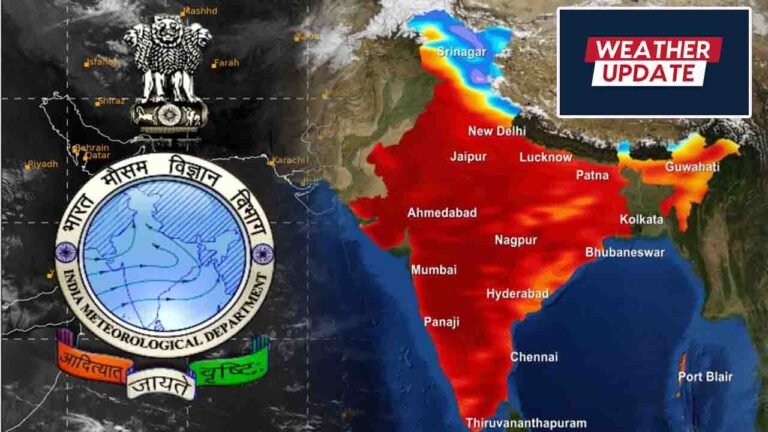
The revision comes as IMD has predicted a heatwave week for Delhi, with temperatures likely to touch 44°C. On Friday, the department’s alert indicated that the 95th and 98th percentile thresholds would be breached for minimum temperatures near coastal Karnataka and at a few other locations across the country.



Scientists have welcomed the percentile-based approach. M Rajeevan, former secretary of the ministry of earth sciences and a climate scientist, described it as a positive step. “It is a good decision. Using percentiles is much more meaningful than absolute values. That is what we proposed in our research papers and met monograph. Percentiles help specify extremes at a given location irrespective of the background mean. There is no universal rule for heatwave definition. It should reflect the meaning and purpose of heatwave alert,” Rajeevan said.
The update gains added importance amid forecasts of a challenging summer ahead. An El Nino event is expected to develop by mid-2026. Both the World Meteorological Organisation and the US National Oceanic and Atmospheric Administration have placed the probability of its emergence between June and August at around 80 percent.
WMO has also warned of near-global dominance of above-normal land surface temperatures through May, June and July. It has further indicated below-normal rainfall over India until July.
The science linking humidity to heat stress continues to evolve. Wet-bulb temperature, which combines heat and humidity to show how effectively the human body can cool itself through sweating, is increasingly viewed as a more reliable indicator than air temperature alone. When wet-bulb temperature reaches the level of human skin temperature, sweat can no longer evaporate effectively, causing the body’s primary cooling mechanism to fail.
The widely accepted survival threshold for wet-bulb temperature has long been set at 35°C. However, recent physiological studies presented by Harvard researchers suggest the true limit may be closer to 31°C. Scientists have noted that the temperature thresholds requiring emergency responses are more complex than presently understood.
This percentile-based system represents a shift toward location-specific assessment of heat extremes. By focusing on the 95th percentile, the IMD aims to issue timely alerts tailored to local climate patterns rather than relying solely on fixed national thresholds. The approach is expected to particularly benefit vulnerable coastal populations where high humidity amplifies the impact of even moderate temperatures.
As India prepares for the coming weeks and months marked by potential El Nino influences, the updated warning system could help authorities and residents take earlier preventive measures against heat-related risks. The IMD’s move aligns with growing recognition among experts that heatwave definitions must adapt to reflect both temperature and humidity dynamics specific to different regions of the country.