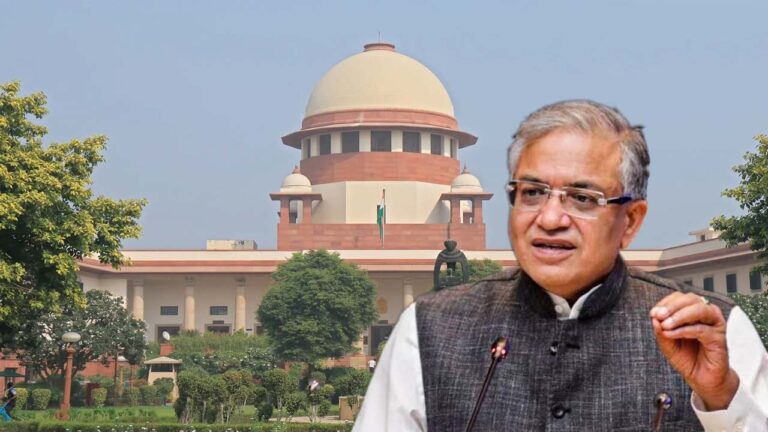

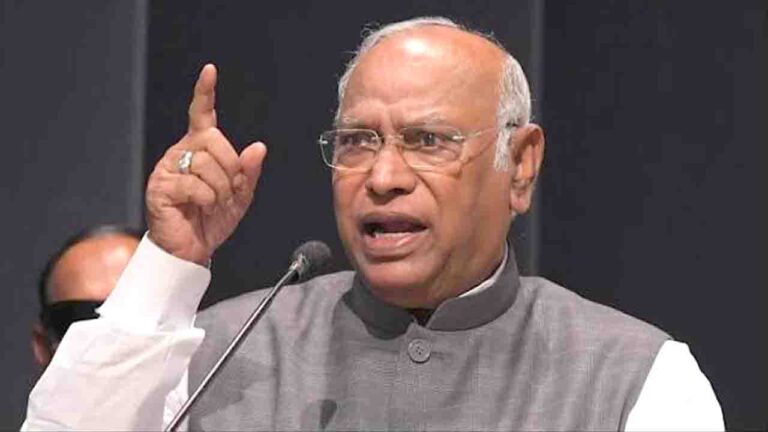
NEW DELHI: Congress president Mallikarjun Kharge on Thursday launched a sharp attack on Prime Minister Narendra Modi over the spending and transparency of the PM CARES Fund. Citing the fund’s financial statement for the year 2024-25, Kharge demanded strict accountability and brought up allegations regarding the Shri Ram Mandir Trust.
In a statement posted on social media platform X, the Congress chief claimed that the PM CARES Fund held a closing balance of approximately Rs 8,452 crore at the end of the 2024-25 financial year, but spent only Rs 87.85 lakh during that period. He pointed out that the expenditure amounted to barely 0.01 per cent of the total closing balance.
“PM does not CARE: Public Authority Without Public Accountability?” Kharge wrote, adding, “As if one Shree Ram Mandir Trust was not enough for Chanda Chori… ! Remember, you, Modi ji announced both PMCARES fund and Ram Mandir Trust and both get donations under your oversight !”
Raising questions about the governance of the fund, Kharge claimed that the PM CARES Fund remains exempt from Right to Information (RTI) scrutiny, CAG audits, and Parliamentary oversight. He highlighted that the Prime Minister serves as its Chairman, alongside the Ministers of Defence, Home, and Finance as Trustees, and noted that it accepts Corporate Social Responsibility (CSR) contributions and tax-deductible donations.
“Why does a Fund bearing the Prime Minister’s name remain beyond the ordinary mechanisms of public scrutiny?” Kharge asked, while also questioning the rationale behind an emergency fund accumulating thousands of crores when only a fraction was spent.


According to the financial statement shared by Kharge, the fund received domestic and foreign contributions during 2024-25, in addition to interest earned on bank savings and fixed deposits.
The Prime Minister‘s Citizen Assistance and Relief in Emergency Situations Fund (PM CARES Fund) was officially registered as a public charitable trust in New Delhi on March 27, 2020, under the Registration Act, 1908. It was established as a centralized body to handle distress situations, such as the COVID-19 pandemic, and to deploy relief during national crises.