

Tax department sources have said that all disputes arising from different interpretations of tax laws should not be labelled as “tax terrorism.” This clarification has come after concerns were raised following the Supreme Court’s verdict in the Tiger Global case. Officials from the Central Board of Direct Taxes (CBDT), speaking on condition of anonymity, said that in the legal field, laws are often interpreted in different ways, which naturally leads to disagreements.
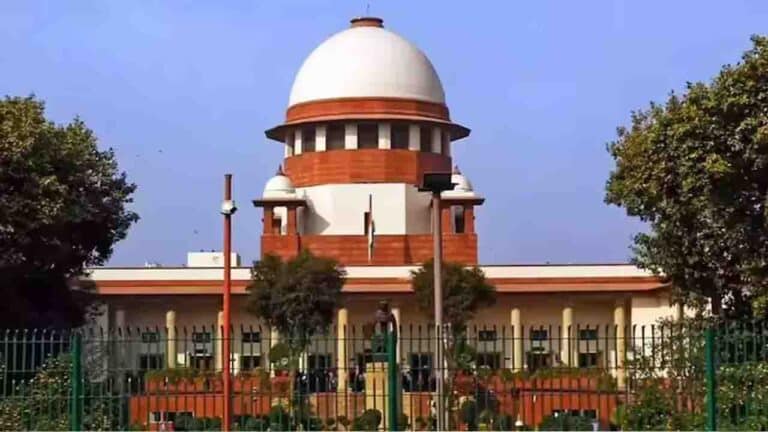
On January 15, the Supreme Court ruled that capital gains earned by US-based investment firm Tiger Global from selling its stake in Flipkart are taxable under Indian law. With this decision, the apex court overturned a 2024 judgment of the Delhi High Court. Earlier, the High Court had accepted Tiger Global’s argument that it was not required to pay tax on the transaction.
Tiger Global had invested in Flipkart between 2011 and 2015 through several Mauritius-based subsidiaries. In 2018, after Walmart acquired a controlling stake in Flipkart for about $16 billion, Tiger Global sold its shareholding.
The firm argued that the transaction was exempt from capital gains tax because the investment was made before April 1, 2017. At that time, under the India-Mauritius Double Taxation Avoidance Agreement (DTAA), capital gains were not taxable in India, subject to certain conditions.
Sources explained that the tax amount involved in this case is high simply because the value of the transaction was large. They stressed that a higher tax demand does not indicate aggressive action by the tax department. According to CBDT officials, in large transactions, higher tax amounts are normal, and pending demands or withheld refunds should not be seen as arbitrary action.



In this case, the Income Tax Department had withheld a refund claim of ₹967.52 crore due to ongoing proceedings. The assessment process was linked to the legal dispute, with the main issue being the interpretation of the DTAA.
Officials also referred to the Supreme Court judgment, noting that Justice JB Pardiwala emphasized the need for a country to protect its tax base. The court upheld India’s economic and financial sovereignty and recognized the state’s interest in safeguarding public revenue. The officials added that there was no undue delay from the department’s side, as the matter had passed through multiple legal forums before reaching the Supreme Court.