

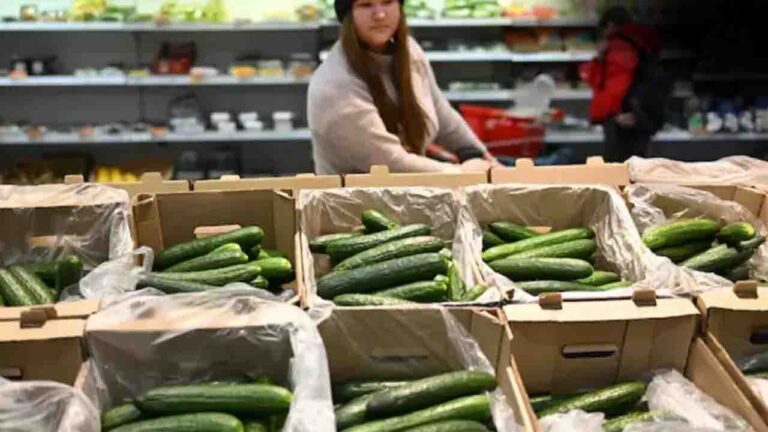
While the world watches ups and downs in gold and silver prices, a surprising new issue has hit ordinary people in Russia. The price of cucumbers has shot up so sharply that many are now calling them the “new gold.”
According to a report by The Independent, cucumber prices in the country have doubled since December. They now stand at around 300 rubles (about Rs 356) per kilogram. In some places, certain cucumbers are selling for two or even three times that amount. Angry shoppers have taken to social media, posting pictures of these costly vegetables and using dark humor to compare cucumbers to luxury items.
A report from Forbes Russia noted that by early February, cucumber prices had climbed as high as the cost of meat. In many supermarkets, cucumbers are now priced the same as — or even higher than — meat and imported fruits like bananas. What started as a market problem has now reached the world of politics.
Sergei Mironov, a leader from the Just Russia party, has strongly criticized the government. He rejected official claims that the rise is only due to seasonal factors. He said it is unacceptable that people are struggling to afford even basic food items.
Several factors are behind this steep jump in cucumber prices. Russia’s economy has shifted focus heavily toward military needs because of the ongoing war, leaving other sectors facing fast-rising costs.



There is also a serious shortage of workers. The greenhouse industry once received large subsidies and ran smoothly, but the war and related military drafts have pulled away many laborers, creating a big labor gap.
On top of that, the value-added tax (VAT) increased from 20% to 22% starting January 1, 2026. This change has added extra pressure on consumer prices.
The agriculture ministry insists the high prices are linked to winter conditions and seasonal changes. However, the current surge is much larger than normal seasonal ups and downs.
Retailers remain hopeful. They expect prices to come down next month as the weather gets warmer and more cucumbers become available. For now, though, this everyday vegetable has turned into a major talking point across Russia.