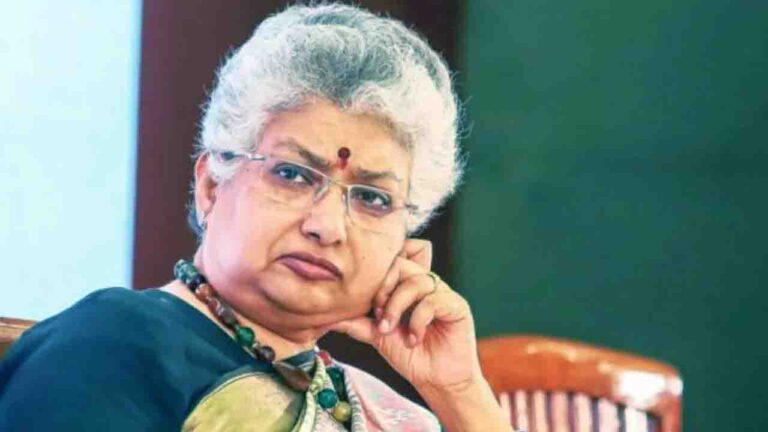

New Delhi: In a blunt reminder to the corridors of power in Delhi, Supreme Court judge Justice BV Nagarathna on Saturday said the Indian Constitution doesn’t care which political party is in power at the Centre or in the states. Speaking at the first Dr. Rajendra Prasad Memorial Lecture, she made it clear that the Sarkar at the Centre must stop viewing states as “subordinates” and start treating them as “equal units.”
Addressing a gathering at the Chanakya National Law University on the theme ‘Constitutionalism Beyond Rights: Why Structure Matters’, Justice Nagarathna pulled no punches. She stressed that unless they cross the boundaries set by the Constitution, state governments are not under the thumb of the Centre.
‘No Room for Party Politics’
The Justice was firm: federalism is a constitutional mandate, not a political choice. Whether the same party is in power across the board or rival netas are locking horns, the rules of engagement remain the same.
“The Centre-state relationship falls within the ambit of constitutional governance. We must keep partisan differences and ideological disagreements out of this,” she said.
She further warned against a “pick and choose” approach, stating that the federal spirit dies the moment the Centre starts showing favoritism. Whether it is a development yojana or an administrative call, the aam aadmi in one state cannot be treated differently from another just because of who they voted for.



Power Cannot Sit in One Place
Breaking down the logic of our democracy, Justice Nagarathna noted that the Constitution was designed to prevent political power from being concentrated in a single “centre.” This balance of power between the Union and the States isn’t just a legal formality—it is what ensures that the government remains sensitive and accountable to the people.