
Indian Handicrafts Go Digital: For decades, rural artisans across India faced significant geographical and economic constraints. Often reliant on middlemen to reach markets, these skilled creators struggled to secure fair pricing for their labor-intensive work. Today, however, the rise of digital infrastructure and e-commerce platforms has fundamentally altered this landscape.
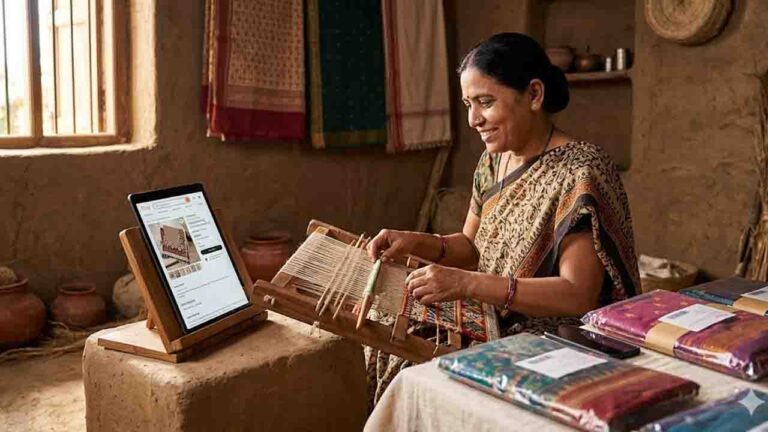
With only a smartphone and internet access, local craftsmen are now establishing direct-to-consumer digital storefronts. Platforms such as Amazon Karigar, Etsy, and dedicated Instagram pages have become vital tools for this shift. By managing their own digital presence, artisans are eliminating intermediaries, ensuring they retain a significantly higher profit margin on every sale.
The reach of this transformation is expansive, connecting heritage crafts—from intricate Kashmiri Pashminas to authentic terracotta jewelry—with buyers worldwide. International consumers are increasingly seeking out these items, placing a high value on the cultural heritage and craftsmanship embedded in every piece.
This movement is further supported by a distinct change in consumer behavior. Modern buyers are actively choosing sustainable, eco-friendly, and culturally significant handmade goods over mass-produced, machine-made factory products.
By utilizing these digital sales channels and modern international shipping facilities, Indian artists are moving beyond mere survival. They are effectively building sustainable, profitable global brands directly from their rural workshops, ensuring that centuries-old traditions remain economically viable in a modern economy.