
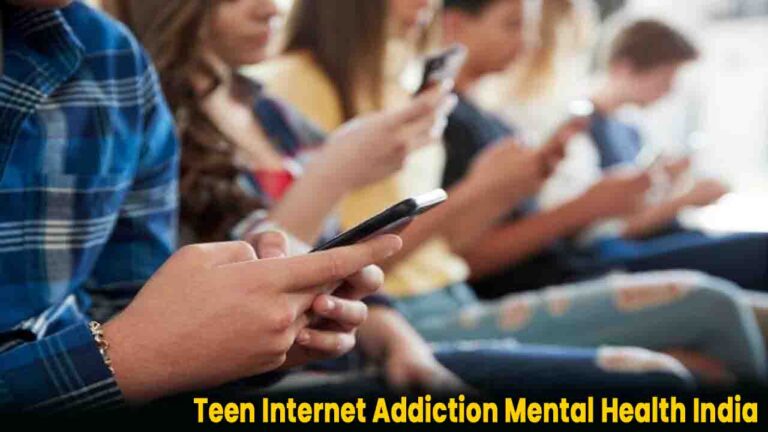

Teen Internet Addiction Mental Health India: The rapidly evolving digital landscape has firmly integrated the internet and social media into the daily lives of adolescents. Whether it is for education, social interaction, or entertainment, the dependency on digital platforms has surged exponentially. However, mental health experts now caution that when this usage crosses a certain threshold, it swiftly morphs into what is clinically termed a ‘behavioural addiction.’ This condition is not merely a phase but is actively inflicting profound and lasting damage on the mental health of teenagers.
According to Himani Chaudhary, a PhD scholar in psychology, internet addiction is directly elevating the risk of multiple psychological disorders among adolescents. Extensive research and ground realities indicate that the most pervasive impact is manifesting in the form of ‘Anxiety Disorder.’ The relentless race to project a superior image on social media, the constant pressure to maintain an unbroken online presence, and the toxic habit of comparing one’s life with the curated lifestyles of others are generating extreme, unidentified mental stress within young minds.
The glossy allure of the digital universe is systematically distancing teenagers from their real-world surroundings. Chaudhary argues that this escalating trend is actively fostering ‘Social Isolation.’ When adolescents begin to invest more time on screens rather than nurturing real-life relationships and face-to-face conversations, their fundamental social skills begin to erode. Consequently, they start feeling incapable of connecting emotionally with family and friends, which emerges as a significantly negative indicator for their holistic personality development.
Another dark facet of internet addiction is the severe disruption of the sleep cycle. Clinical reports suggest that late-night smartphone usage is triggering symptoms of ‘Sleep Disturbance’ or complete insomnia. This acute lack of sleep leads to fatigue, excessive irritability, and a sharp decline in concentration levels the following day. If this pattern persists over a prolonged period, it aggressively gives birth to ‘Depressive Symptoms,’ thereby generating deep emotional instability.
Dr. Mohini Mittal, an Assistant Professor in the Department of Psychology, views the crisis with even greater clinical depth. She asserts that the excessive use of digital media in teenagers is no longer just a bad habit but has transformed into a ‘Psychological Risk Behaviour.’ Because the adolescent brain is still in a critical phase of development, the impact of digital addiction at this age can be very deep and permanent.



Dr. Mittal firmly believes that the burden of seeking social acceptance and curating an online identity is hollowing out the mental health of teenagers. She warns that if this issue is not addressed promptly, the situation could assume a terrifying form of emotional instability in the coming years. She stresses that this is not merely an individual problem but a substantial familial and social responsibility. If digital habits are not controlled and guided today, the future will witness a generation that is mentally fragile and chronically stressed.
To combat this psychological crisis, experts have outlined crucial guidelines for parents. It is imperative to set a strict time limit for mobile and internet usage. Household environments must encourage open dialogue where children can discuss their digital insecurities without any fear. Emphasis should be placed on outdoor physical activities to divert attention from screens, and families should practice a ‘Digital Detox’ for at least a few hours or one day a week. Most importantly, children must be taught that the ‘likes’ and ‘comments’ of the digital world are not a measure of their real worth.
Ultimately, internet and social media addiction stands as a serious social warning in contemporary times. The solution lies not in outright bans but in awareness and balanced usage. The analysis put forth by experts like Dr. Mohini Mittal and Himani Chaudhary makes it unequivocally clear that unless concrete steps are taken in the right direction today, it will become exceedingly difficult to prevent an entire generation from slipping into the abyss of psychological disorders.