



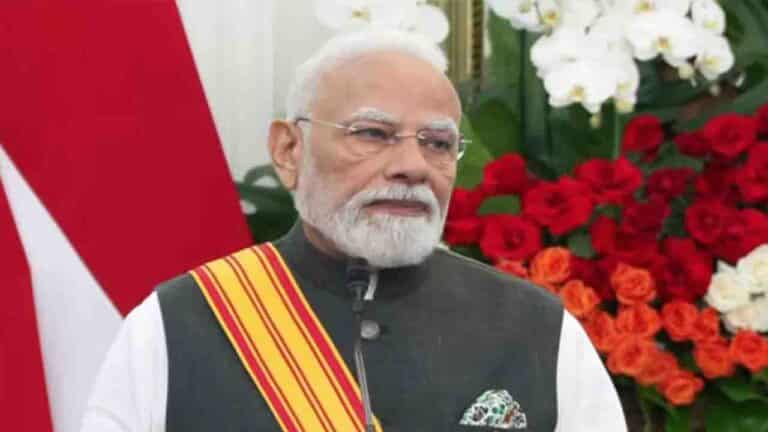
NEW DELHI: PM Modi’s recent three-nation tour has significantly elevated India’s strategic footprint in the Indo-Pacific. Amid rising Chinese dominance and shifting US policies, New Delhi secured landmark agreements spanning the BrahMos missile deal, uranium supply, critical minerals, and sports diplomacy to strengthen regional partnerships.
India has noticeably intensified its engagement in the Indo-Pacific over the past few weeks. A major milestone includes a deal to sell ‘BrahMos’ supersonic cruise missiles to Indonesia. Simultaneously, key pacts in defense, energy, and critical minerals were signed with Australia, signaling New Delhi’s readiness to play a larger, more robust role in the region.
This diplomatic push comes amid heightened regional security tensions. Just a day before PM Modi arrived in Indonesia, China conducted a nuclear-capable ballistic missile test in the Pacific Ocean. The test drew strong protests from several nations and revived global concerns over Beijing’s expanding military muscle.
Foreign Secretary Vikram Misri stated in Melbourne that the Chinese missile test was raised during bilateral talks between PM Modi and Australian Prime Minister Anthony Albanese, with both sides expressing concern. The two leaders agreed to intensify mutual cooperation to maintain peace, security, and stability in the Indo-Pacific.
Currently, Indo-Pacific nations are striving to shoulder their own security and economic responsibilities. Washington has also been pressuring its allies to manage their own defense requirements.


Following his return to power, US President Donald Trump has asked allies to share security costs and has imposed new tariffs on both partners and competitors. The US administration even altered its messaging by dropping ‘Indo’ from the name of the ‘US Indo-Pacific Command’, though officials maintain that the military mission remains unchanged.
Amid these shifting dynamics, regional countries are forming collaborative networks. Australia and Fiji recently signed a defense pact named the ‘Ocean of Peace’—marking Fiji’s first formal security alliance. New Zealand has also expressed interest in joining. Following his meeting with PM Modi, New Zealand Prime Minister Christopher Luxon noted the emergence of ‘mini-latticeworks’ or smaller multilateral alliances in the region.
Ashok Malik, India Chairman of the Asia Group, observed that China’s rise is reshaping the regional landscape. With a perceived reduction in US influence, nations are pooling resources in sectors like semiconductors, critical minerals, and maritime security to minimize vulnerabilities under pressure from both Washington and Beijing.
A major success of the tour for India was securing an agreement for uranium supply from Australia, which has agreed to provide uranium for India’s civil nuclear program and enhance energy cooperation. The two nations also initiated new partnerships in critical minerals and technology supply chains to reduce reliance on China for key resources.
Defending the decision to sell uranium to India, Australia’s Minister for Defence Industry Pat Conroy expressed full confidence that it would be used solely for peaceful energy production. He described India as a ‘trusted partner’, calling it an emerging global power and the world’s largest democracy.
During his recent meetings, PM Modi repeatedly emphasized that India’s relationships are anchored in ‘mutual trust’, calling it the region’s greatest strategic asset. This approach resonates with countries looking to diversify their security and economic ties instead of choosing between Washington and Beijing.
India continues to work on defense and resilient supply chains through the ‘Quad’ grouping alongside Australia, the US, and Japan. Furthermore, given the ongoing crisis in Iran, India is exploring new avenues for coal, gas, and minerals to reduce its energy dependence on West Asia. However, since India still relies heavily on China for critical machinery and rare earth elements to boost its domestic manufacturing, it is simultaneously attempting a gradual improvement in ties with Beijing.