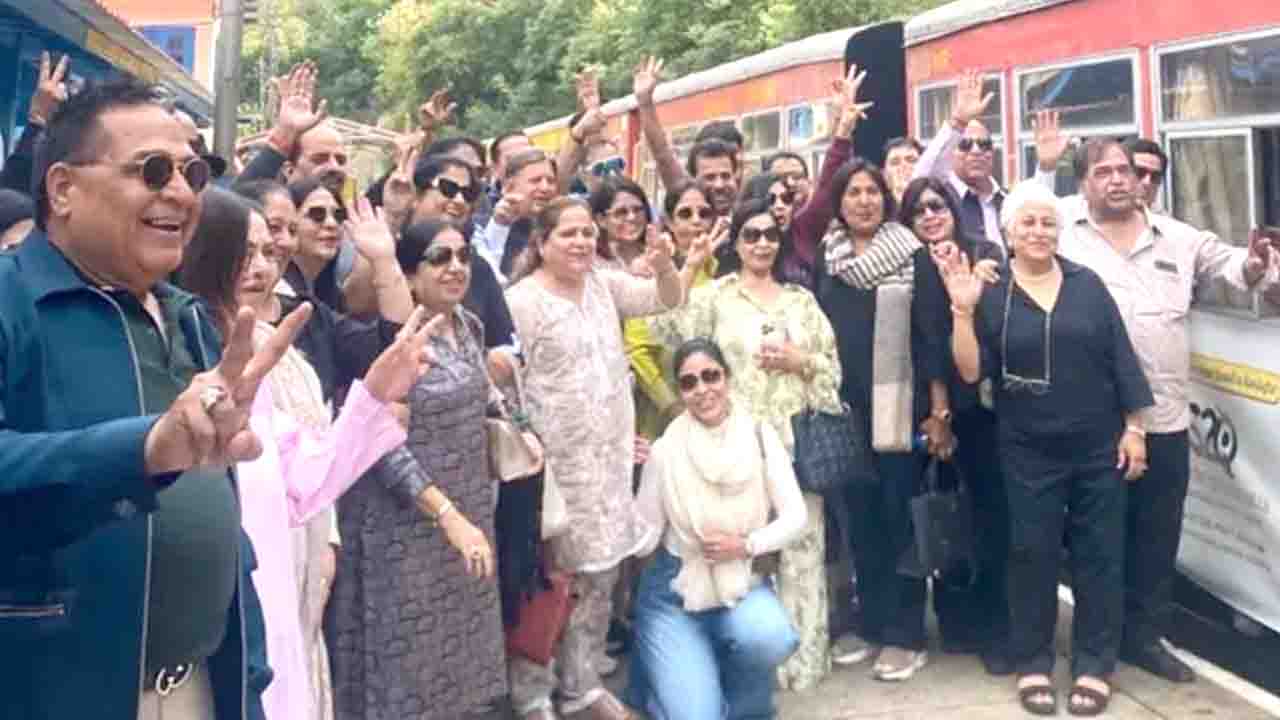

SHIMLA: In a significant boost to luxury heritage tourism in Himachal Pradesh, a group of nearly 40 foreign nationals and Non-Resident Indians (NRIs) chartered a special Toy Train on the historic Kalka-Shimla railway line to experience the scenic beauty of the Himalayas.
The group booked the exclusive three-coach train for a sum exceeding ₹1 lakh, traveling from Dharampur to Shimla. The journey, characterized by its slow pace and panoramic views, saw the tourists engaging in festivities, singing, and dancing as they traversed through the lush green valleys and high-altitude terrain.
A Preference for Heritage Over Speed
Despite the rail journey taking nearly double the time required by road via bus or private vehicle, the group opted for the Toy Train to avoid highway traffic congestion and the physical exhaustion of driving on mountain roads. The passengers traveled in transparent vista-dome coaches, designed specifically to provide an unobstructed 360-degree view of the surrounding landscape.


Several tourists noted that the experience of a heritage rail service is “unparalleled,” citing the historical significance of the track and the unique perspective it offers of the Himachal mountains.
The Charm of 103 Tunnels
The Kalka-Shimla track, a UNESCO World Heritage site, is renowned for its engineering marvels, including 103 tunnels and numerous arched bridges. For the visiting group, these tunnels remained the highlight of the trip, adding an element of thrill to the aesthetic journey.
Peak Tourism Season in Himachal
The arrival of this high-profile group aligns with the onset of the peak tourism season, which typically runs from April to June. Railway officials have observed a consistent trend where international and domestic travelers prioritize the rail route during these months to witness the blooming flora and cooler climates.
The successful charter of this special train underscores the growing demand for personalized, high-value experiential tourism within the Indian railway circuit, particularly on heritage routes that define the cultural identity of the region.