
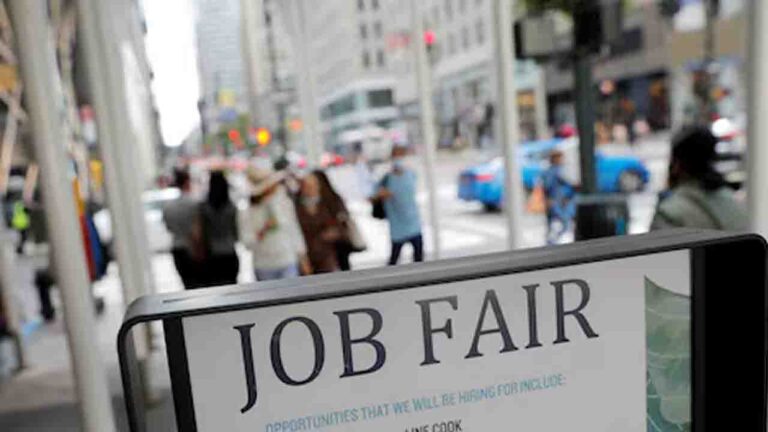
US Jobless Claims Drop Sharply: New applications for unemployment benefits in the United States fell unexpectedly last week, reaching the lowest level in a month, according to Labor Department figures released on December 31, 2025. However, ongoing weak hiring trends throughout the year offer little sign of a robust recovery in the job market during President Donald Trump’s second term.
For the week ending December 27, initial claims declined by 16,000 to a seasonally adjusted 199,000—the fewest since late November—defying forecasts from economists who anticipated an increase to around 220,000. The report came out a day early due to the New Year’s holiday. Recent weeks have seen fluctuations in the data, largely attributed to difficulties in seasonal adjustments during the busy holiday period.
Economists characterize the current labor market as stuck in a “no hire, no fire” pattern, with low layoffs but minimal new job creation. This final claims report of 2025 reflects that stagnation.
Despite solid overall economic growth—including the fastest quarterly GDP expansion in two years during Q3—the employment sector has slowed markedly. Experts point to Trump’s policy changes, such as high import tariffs and strict immigration enforcement, as factors reducing both labor demand and available workers.
Continuing claims, which track those receiving benefits beyond the first week and serve as an indicator of hiring activity, dropped by 47,000 to 1.866 million for the week ending December 20.



John Ryding of Brean Capital noted that the sharp decline around Christmas likely stems from seasonal adjustment issues. On a broader scale, he added, layoffs have not surged meaningfully in 2025, with the annual average claims at 226,100—slightly above 2024’s 223,000.
Continuing claims had approached 2 million in late October but declined toward year-end, coinciding with the resolution of a prolonged federal government shutdown in mid-November. Still, they remain elevated compared to last year and match recent consumer surveys showing worsening views of job opportunities, akin to early 2021 levels.
Job growth in 2025 has been notably slow, averaging only about 55,000 positions per month through November—roughly one-third of the prior year’s rate. Hiring has become more concentrated, as companies seek policy stability under the Trump administration and adapt to advances in artificial intelligence that boost productivity.
This tepid pace has pushed overall employment gains close to the level needed just to maintain a stable unemployment rate. The jobless rate climbed to 4.6% in November, a four-year peak, influenced partly by disruptions from the 43-day government shutdown. A Chicago Fed indicator points to it holding steady at that level in December. Full December employment data, including the unemployment rate, is scheduled for release on January 9, 2026.
Notably, the share of the labor force on unemployment rolls stands at just 1.1%, unchanged much this year despite the rise in the official rate from 3.7% in January. This disconnect highlights employers’ hesitation to lay off staff amid persistent labor shortages.
These labor market quirks are fueling debates at the Federal Reserve over further interest rate reductions to support employment versus holding steady to combat inflation still above the 2% goal.
The Fed lowered its key rate by another 25 basis points this month, bringing it to 3.50%-3.75%, but indicated limited near-term cuts amid uncertainties in jobs and prices—the latter pressured upward by tariff-related goods costs.
Minutes from the December meeting revealed divisions among officials, with some viewing the latest cut as a close call. Policymakers are awaiting early 2026 data to guide future decisions on potential easing.
-Agency Report