
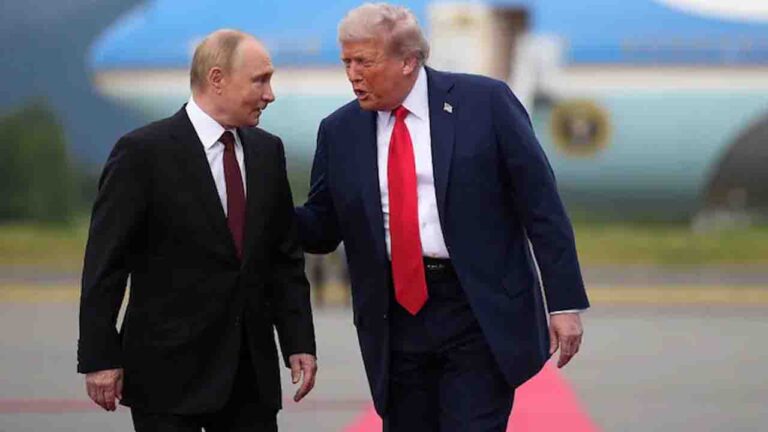
US-Russia nuclear deal expires today: The last remaining nuclear arms control agreement between the United States and Russia is set to expire on Thursday, removing the final legal limits on the deployment of nuclear warheads by the two countries. With this, fears are growing of an uncontrolled nuclear arms race between the world’s two biggest nuclear powers. The concern has deepened as both US President Donald Trump and Russian President Vladimir Putin have shown little interest in extending the treaty, especially amid ongoing tensions linked to the Ukraine war.
The expiry of this agreement marks the collapse of nearly 30 years of nuclear arms control cooperation between Washington and Moscow. This framework played a key role in reducing nuclear threats after the Cold War. The stakes are high because the US and Russia together hold about 87 percent of the world’s nuclear weapons. The treaty, known as the Strategic Arms Reduction Treaty or New START, was first signed in 2010 and renewed in 2021. It set clear limits on nuclear arsenals and included systems to verify compliance.
Under New START, both countries were required to share information about their strategic nuclear forces. The agreement also allowed on-site inspections of missiles with little notice, helping to build trust and transparency. Signed by former US President Barack Obama and Russia’s then President Dmitry Medvedev, the treaty placed both nations on nearly equal footing as nuclear superpowers. It capped nuclear warheads at 1,550 for each side. With its expiry, those limits vanish, allowing both nations to expand their arsenals without restriction.
Neither leader has shown urgency to save the deal. President Trump has downplayed the treaty’s expiry, stating that if it ends, it ends. He has long opposed international limits and previously ordered steps toward resuming nuclear weapons testing. Russia, meanwhile, has announced it no longer feels bound by warhead limits after its proposal for a short extension was ignored. Still, Putin told Chinese President Xi Jinping that Russia would act responsibly. Medvedev, however, warned that letting the treaty lapse could lead to catastrophe and even nuclear war.
A major obstacle to any new agreement has been disagreement over who should be included. The US has demanded that China be part of future talks, citing concerns over Beijing expanding its nuclear arsenal. This issue also worries India, given its border tensions with China. China’s nuclear stockpile, estimated at around 600 warheads, is far smaller than that of the US. Russia, on the other hand, has argued that France and the United Kingdom should also be included in any future deal.



The international response has been tense. The United Nations has urged both countries to renew the treaty quickly. UN Secretary General Antonio Guterres warned that the risk of nuclear weapons being used is the highest in decades and said the world is entering a phase without binding limits on superpower arsenals. The Pope also appealed to both sides to do everything possible to prevent a new nuclear arms race.
The impact of the treaty’s expiry goes beyond the US and Russia. It threatens the Nuclear Non-Proliferation Treaty, which is due for review later this year. Under the NPT, non-nuclear states agreed not to pursue nuclear weapons, while nuclear powers promised to reduce theirs. If the US and Russia expand their arsenals, it could undermine this global bargain and push other countries toward nuclear weapons. Both nations have already begun modernising their nuclear forces, suggesting a new arms race is already in motion.
Russia has recently tested advanced nuclear weapons, including a nuclear-powered underwater torpedo and a nuclear-powered cruise missile. At the same time, President Trump has pushed plans for a “Golden Dome” missile defense system to shield North America from long-range threats, citing dangers from Russia. He has even linked these concerns to his interest in Greenland. Popular culture has reflected these fears too, with films imagining nuclear crises that no longer feel distant.