
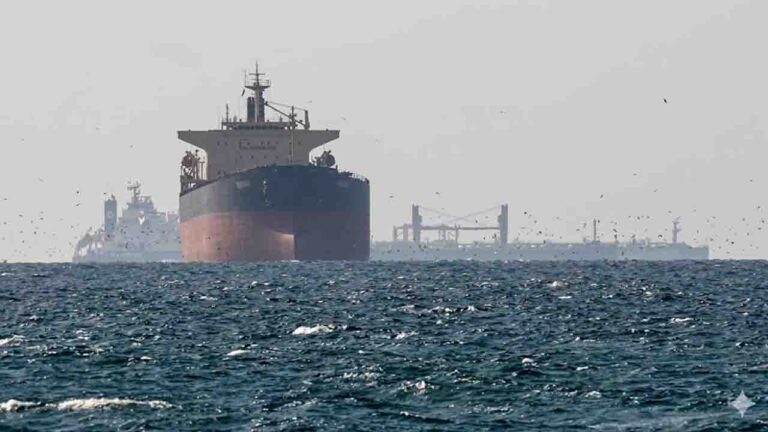
NEW DELHI: The Petroleum Ministry on Saturday cleared the air regarding oil imports from Iran, stating firmly that there are no payment issues holding up shipments. The government also dismissed reports of an Iranian oil tanker being diverted away from India due to financial roadblocks, calling such claims “factually incorrect.”
In a post on X (formerly Twitter), the Ministry of Petroleum and Natural Gas clarified that Indian refiners continue to source crude from over 40 countries. This flexibility allows companies to pick and choose where they buy their oil based on commercial math and geography.
The Mystery of the ‘Ping Shun’
The controversy began after reports suggested that the Ping Shun—an Aframax tanker carrying Iranian crude—had suddenly changed its course. The vessel, which was initially expected to dock at Vadinar in Gujarat, reportedly changed its signal to Dongying, China.
If it had landed in Gujarat, it would have been the first Iranian crude shipment to reach Indian shores in nearly seven years.
However, the Ministry was quick to point out that rerouting is a standard part of the global oil business.



“Claims on vessel diversion ignore how the oil trade works,” the ministry stated.
It explained that ‘Bills of Lading’—the official documents for the cargo—often list tentative ports. It is common practice for a ship to change its destination mid-voyage to optimize trade or handle operational shifts.
Payments and Port Arrivals
Despite the buzz around the Ping Shun, the government maintained that there is no “payment hurdle” for Iranian oil. To back this up, the Ministry highlighted that another vessel, the Sea Bird, successfully berthed at Mangalore on April 2. That ship is currently discharging 44,000 tonnes of Iranian LPG.
“Amid Middle East supply disruptions, Indian refiners have secured their crude oil requirements,” the Ministry assured, adding that the country’s energy needs are fully covered for the coming months.
Why Iranian Oil is Back in the News
India hasn’t officially bought Iranian crude since May 2019, after US sanctions were tightened. Before the taps were turned off, Iran was a massive supplier, accounting for roughly 11.5% of India’s total imports. In 2018, India was buying a massive 5,18,000 barrels per day (bpd) from Tehran.
The current window of opportunity opened after Washington recently granted a 30-day sanctions waiver on Iranian oil already at sea. This was a move to cool down global oil prices inflated by the ongoing US-Israeli conflict with Iran.
Key Figures to Note:
- Waiver Deadline: The 30-day window expires on April 19.
- Oil at Sea: Around 95 million barrels of Iranian oil are currently on water.
India’s Share: Experts estimate that about 51 million of those barrels could be snapped up by India, while the rest is better suited for China or Southeast Asia.
The Ping Shun itself is estimated to be carrying 6,00,000 barrels of oil loaded from Kharg Island in early March. While the tanker may have adjusted its course, the sarkar remains confident that India’s energy security is on solid ground.