



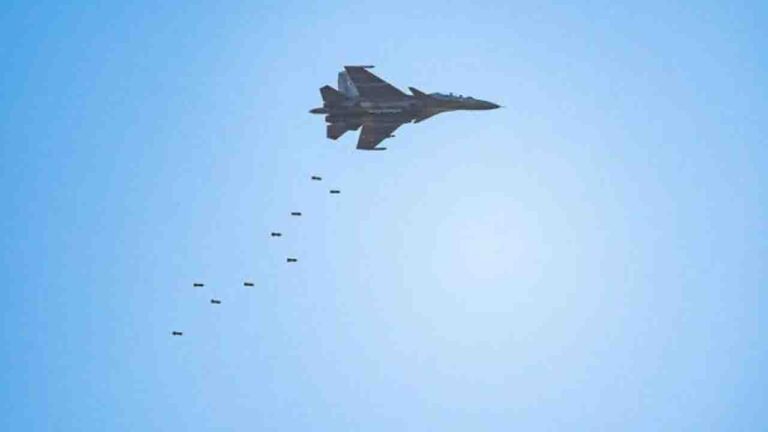

New Delhi: In a major push for Aatmanirbharta in the skies, the Ministry of Defence has set the wheels in motion to develop an indigenous 1,000-kg aerial bomb. Aimed at reducing reliance on foreign imports, this high-calibre munition will be India’s homegrown answer to the heavy-duty Mk-84 bombs currently used by the Indian Air Force (IAF).
The plan is simple but ambitious: build it here, test it here, and eventually induct it into the fleet. According to senior officials, the government has already issued an Expression of Interest (EoI) for the design, development, and procurement of these massive bombs, including their tail units and specialized equipment.
One Bomb, Many Aircraft
The real strength of this new system lies in its versatility. Officials confirmed that the bomb is being designed to be compatible with both Russian and Western-origin fighter jets. This means whether it’s a Sukhoi or a Rafale, the IAF will have a “Made in India” heavy-hitter ready for action.
Described as a “natural fragmentation” weapon, the bomb is built to pack a punch. It is designed to create a massive blast effect and high “peak over-pressure” to take down enemy targets with precision and power.
The Roadmap: Two Phases, 600 Bombs
The project will move in two distinct stages under the ‘Make-II’ and ‘Buy (Indian IDDM)’ categories:



Phase 1 (Development): Selected Indian agencies will develop six prototypes—both live and inert. This phase involves rigorous testing, including composite trials, to ensure the bombs meet the IAF’s strict standards.
Phase 2 (Procurement): Once the design is proven, the sarkar plans to procure 600 of these aerial bombs.
Currently, the IAF depends on foreign manufacturers for Mk-84 class bombs. This project aims to change that by ensuring at least 50% indigenous content in the new development.
The Timeline
Don’t expect these to roll off the assembly line tomorrow. The ministry has set a realistic timeline of about 2.5 years from the start of the EoI to the final signing of the contract. This window includes everything from building the prototypes to conducting user trials at IAF units across the country.
Doors Open for Private Players
The government isn’t doing this alone. The EoI is open to Indian entities, including private players. While foreign collaboration—through joint ventures or technology transfers—is allowed, the focus remains firmly on Indian design.
To win the contract, companies will have to prove they have the engineering muscle and the infrastructure to pull this off. Financial stability and the ability to maintain high levels of indigenous content will be the key benchmarks during evaluation.
By the time the project reaches the finish line, the IAF hopes to have a steady, local supply of heavy munitions, ensuring that India’s air power stays sharp without looking abroad.