



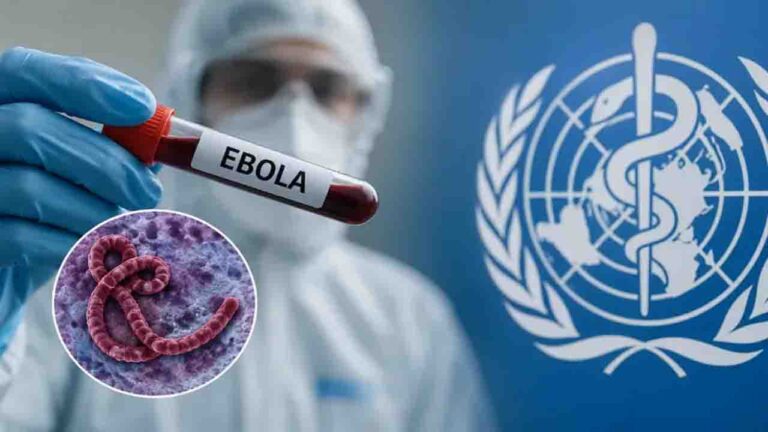

Vadodara: Amid rising Ebola virus cases in African countries such as Uganda, Congo, and South Sudan, Gujarat has reported its first suspected case of the infection.
A man from Vadodara showing Ebola-like symptoms was rushed to Ahmedabad Civil Hospital, where he has been kept under observation. Health officials have collected his samples and sent them for laboratory testing as the Gujarat government and health department remain on high alert, according to Jagran Gujarati.
As a precautionary measure, the Health Department has enforced strict rules at Ahmedabad International Airport. Intensive screening of all passengers arriving from Uganda, Congo, and South Sudan between 9 pm and 10 am has been introduced.
In addition, filling out health declaration forms has been made mandatory for all international travellers arriving from abroad.
Officials said that 11 passengers who recently arrived in Ahmedabad from the three African countries have been placed under home isolation. However, none of them have shown symptoms of Ebola or come into contact with any confirmed positive patient.



Authorities added that home isolation is likely to remain mandatory for travellers arriving from these countries in the coming days as well.
Ahmedabad Municipal Corporation Deputy Health Officer Dr Shailesh Sutaria said that special isolation wards have been prepared in major hospitals considering the seriousness of the Ebola threat.
The facilities include a 60-bed advanced isolation ward at SVP Hospital in Ahmedabad, a 32-bed facility at Ahmedabad Civil Hospital, and a 10-bed special ward at Surat Civil Hospital.
Meanwhile, the emergence of the new “Bundibugyo strain” has raised fresh concerns among health authorities. Unlike the Ebola-Zaire strain, there are currently no approved therapeutics or vaccines specifically available for the Bundibugyo virus.
The WHO has warned that the DRC-Uganda outbreak poses a public health risk to other countries, with some instances of international spread already being documented.
The agency stated that Bundibugyo virus disease contacts or confirmed cases should not travel internationally unless it is part of a medical evacuation. It also advised immediate isolation of confirmed cases and daily monitoring of contacts, along with restrictions on national travel and a complete ban on international travel until 21 days after exposure.