




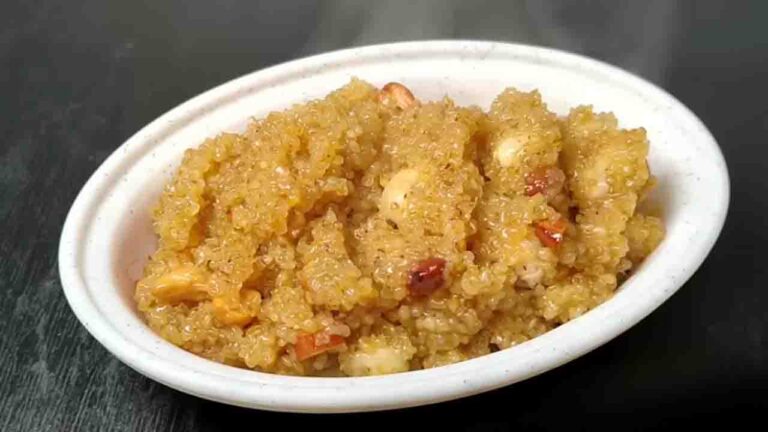
Sweet Broken Wheat Recipe: In the landscape of traditional Indian desserts, kheer and halwa have long dominated the kitchen. However, a superior nutritional powerhouse – Sweet Broken Wheat, locally known as Meetha Daliya or Lapsi – is emerging as the preferred choice for health-conscious households. Packed with fiber and prepared with authentic techniques, this dish offers a perfect balance of taste and wellness.
The Secret to Perfect Texture
The hallmark of a well-made Lapsi is its texture. Unlike the mushy consistency often associated with porridge, this recipe treats broken wheat as “sweet pearls.” By roasting one cup of medium-sized broken wheat in a generous amount of desi ghee until it achieves a light brown hue, the grains pop and seal, ensuring they remain distinct and firm even after cooking.
For those seeking professional results in a standard kadhai (wok) rather than a pressure cooker, the secret lies in the temperature of the water. Adding three to four cups of boiling water to the roasted wheat ensures continuous cooking without making the grains sticky.
Nutritional Fortification with Dry Fruits
To elevate the health quotient, the recipe incorporates a variety of crunchy elements. Almonds and cashews are shallow-fried in desi ghee to enhance their nutty flavor and crispness. Additionally, the inclusion of Phool Makhana (fox nuts) adds a layer of essential minerals. These are roasted separately until crisp and folded into the mix at the final stage to maintain their structural integrity.
The Scientific Cooking Method
A common culinary error is adding sugar too early. Journalistic precision in the kitchen dictates that sweeteners must only be introduced once the wheat grains are fully softened and have absorbed all the water. Adding sugar prematurely can harden the grains, ruining the mouthfeel.



To achieve a professional flavor profile, this version uses 3/4 cup of sugar, a pinch of saffron-infused milk for a rich golden hue, and a unique combination of crushed nutmeg and a tiny piece of alum. This traditional pairing acts as a flavor enhancer, providing a depth that sets this dish apart from standard sweets.
Shelf Life and Serving
One of the most practical aspects of this desi dessert is its longevity. Unlike milk-based sweets that spoil quickly, this Meetha Daliya can be stored for up to 15 days without losing its freshness. Finished with a touch of green cardamom powder and a final spoonful of ghee, it is best served piping hot to experience the full aromatic profile of the wheat and nuts.