



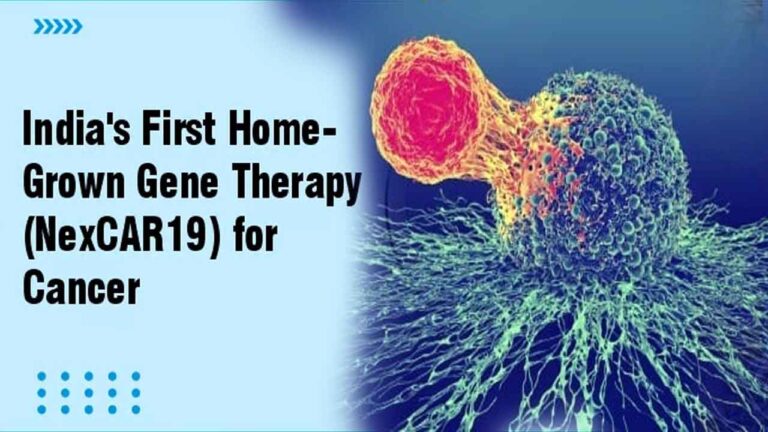
MUMBAI: India’s first indigenous CAR-T cell therapy has opened a new treatment option for patients with certain blood cancers that return after treatment or fail to respond to standard therapies. Yet the scientific achievement raises a practical question: can eligible patients afford the treatment, find an authorised centre and obtain reliable information before their options narrow?
NexCAR19, developed through collaboration between IIT Bombay and Tata Memorial Centre and commercialised by ImmunoACT, received regulatory approval in October 2023. The therapy uses a patient’s own genetically modified immune cells to target cancer cells. Its development marked a significant step in India’s effort to make advanced cell and gene therapies available at a lower cost than comparable treatments abroad.
However, approval alone does not establish how easily patients across India can access the treatment. The questions of affordability, referral pathways, treatment capacity and public awareness deserve closer scrutiny.
What Is NexCAR19 and Who Can Receive It?
NexCAR19 is a CAR-T cell therapy designed for specific forms of relapsed or refractory B-cell acute lymphoblastic leukaemia (B-ALL) and B-cell non-Hodgkin lymphoma, including diffuse large B-cell lymphoma. It is intended for eligible patients aged 15 years and above, subject to the approved indications and specialist assessment.
Relapsed cancer refers to disease that returns after treatment, while refractory cancer fails to respond adequately to treatment. For some patients in these categories, conventional treatment options may have become limited. NexCAR19 is not a universal treatment for all cancers or all blood cancers. Eligibility depends on the cancer subtype, previous treatments, the patient’s overall condition and the treating specialist’s assessment.



How Does the Therapy Work?
Unlike conventional medicines, NexCAR19 is a personalised cellular treatment made using the patient’s own T-cells, which are part of the immune system. The process begins with collecting these cells from the patient’s blood. They are then genetically modified in a specialised facility so they can recognise the CD19 protein found on certain cancerous B-cells.
After manufacturing and quality checks, the engineered cells are infused back into the patient. They are designed to recognise and attack the targeted cancer cells. The treatment requires specialised facilities, trained medical teams and close monitoring. It is not a routine infusion that can be administered safely in every hospital.
Clinical Results: Promising, but Not a Guaranteed Cure
The evidence supporting NexCAR19’s approval came from early-stage clinical trials involving patients with advanced blood cancers. According to the US National Cancer Institute’s account of the trial results presented in December 2023, 36 of 53 evaluable patients with B-cell lymphoma or leukaemia responded to treatment, an overall response rate of approximately 68%.
A complete response was recorded in about half of the evaluable patients. These results demonstrated meaningful anti-cancer activity in a group of patients whose disease had returned or resisted earlier treatment. However, response rates should not be confused with permanent cures or guarantees of longer survival for every patient.
The findings also came from a relatively small clinical-trial population. Larger studies and longer follow-up are important for understanding how durable the responses are, which patients benefit most and how outcomes compare across different cancer subtypes.
The Cost Question: More Affordable Does Not Mean Affordable for Everyone
One of NexCAR19’s most significant features is its lower reported price compared with CAR-T therapies available in Western countries. Published reports have placed the expected cost of NexCAR19 at approximately ₹30–40 lakh per patient, substantially below the cost of some comparable treatments abroad. The actual amount payable should be confirmed directly with an authorised treatment centre.
For many Indian families, however, a bill running into tens of lakhs of rupees remains a formidable financial barrier. The cost of the therapy itself may not represent the entire expense. Patients and caregivers should seek a written estimate covering hospitalisation, preparatory chemotherapy, supportive medicines, monitoring and any additional treatment required to manage complications.
Insurance coverage, financial assistance and other funding arrangements must also be checked individually. A lower price than international alternatives does not automatically make the treatment accessible to every patient who needs it.
Safety Risks Require Specialist Monitoring
CAR-T cell therapy can trigger serious side effects. Two important complications are cytokine release syndrome (CRS), an inflammatory reaction that can cause fever and, in severe cases, organ dysfunction, and immune effector cell-associated neurotoxicity syndrome (ICANS), which can affect brain function.
The severity varies between patients. Although the therapy’s design aims to improve its safety profile, it should not be described as risk-free. Specialist teams must assess patients before treatment and monitor them closely afterwards. Families should understand the potential complications, warning signs and arrangements for emergency care before consenting to treatment.
Where Can Patients Access NexCAR19?
NexCAR19 is administered through specialised, authorised treatment centres equipped to manage CAR-T therapy and its complications. ImmunoACT provides information about its treatment-centre network through its official website. Patients should contact their treating haematologist or oncologist to establish whether they meet the eligibility criteria and obtain a referral to an appropriate centre.
Before travelling or making financial commitments, families should confirm that the centre currently provides the therapy, the expected treatment timeline, the total estimated cost and the arrangements for follow-up care. Official patient information is available at: https://immunoact.com/nexcar19/
The Missing Link: Awareness and Timely Referral
The availability of an advanced treatment does not mean every eligible patient knows about it or can reach a centre that provides it. The key question is whether patients whose blood cancer has returned are being informed about all clinically appropriate options, including CAR-T therapy, at the right stage of their treatment.
Reliable information should explain the eligible cancer types, age criteria, potential benefits, risks, costs and referral process without presenting the therapy as a guaranteed cure. Haematologists, oncologists, hospitals, patient-support organisations and the media can help patients understand when to ask about CAR-T treatment.
Awareness must be accompanied by accurate medical advice and realistic information about financial and logistical barriers. It is also important not to encourage patients to abandon established treatment or delay medical care while exploring this option. Decisions must be made with qualified specialists who understand the patient’s medical history.
The Questions That Need Answers
NexCAR19 demonstrates what collaboration between Indian academic research, clinical institutions and biotechnology companies can achieve. The next challenge is ensuring that its potential translates into meaningful access for eligible patients.
Several questions remain central to that effort: How many eligible patients are being referred for assessment? What is the complete out-of-pocket cost at different centres? How consistently are financial assistance and insurance options available? And how are treatment outcomes and serious adverse events being monitored as use expands?
Clear, publicly accessible information on these issues would help patients and families make better-informed decisions. For someone facing relapsed or refractory B-cell leukaemia or lymphoma, asking a specialist about CAR-T therapy and NexCAR19 may open an additional treatment pathway.
Whether that option is suitable, safe and financially feasible must be determined case by case. The real test of a medical breakthrough is not just whether it works in clinical studies, but whether the patients who may benefit can find it, understand it and access it in time..