
Delhi–Dehradun Expressway: As the new year 2026 approaches, the biggest hope for a smooth and hassle-free journey between Delhi and Dehradun is the much-awaited Delhi–Dehradun Expressway. The expressway is expected to be opened to the public by the end of January or by mid-February. Once operational, it promises to transform travel for thousands of commuters, tourists, and devotees.
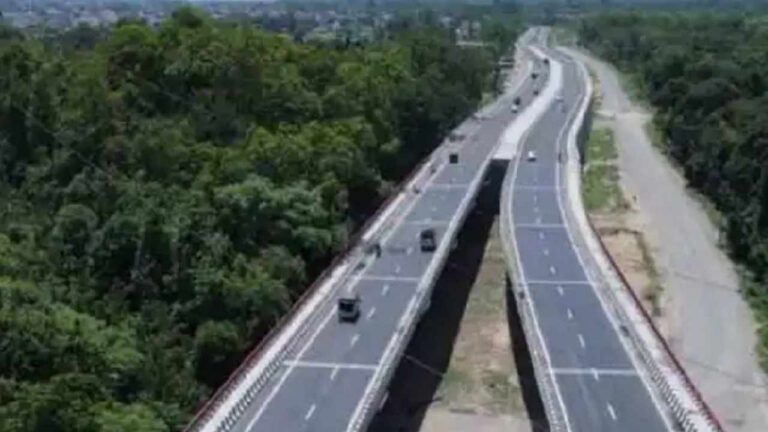
The most exciting highlight of this mega project is Asia’s largest green corridor—a 12-kilometre-long elevated road. This stretch is not only the final segment of the expressway but also its most crucial and iconic part, directly connecting Dehradun and setting a new benchmark in eco-friendly infrastructure.
Final Touches Near Completion
Most of the remaining work on the Dehradun-connected elevated stretch, including installation of signage and speed monitoring cameras, is nearly complete. Mobile towers are also being installed to ensure uninterrupted connectivity. The remaining construction work on the elevated road is expected to be completed within the next 15 days.
Among the ancillary works, the only major task left is the construction of an arch-shaped flyover being built to ensure the safety of devotees traveling towards Datkali. This flyover was not part of the original project and was added later keeping public safety in mind. According to officials of the National Highways Authority of India (NHAI), this work too will be completed within 15 days.
NHAI Project Director Saurabh Singh stated that construction is being carried out at a rapid pace in view of the Central Government’s preparations to open the expressway for public use.



Delhi to Dehradun Distance to Reduce by 23 km
Currently, the distance between Delhi and Dehradun is around 236 kilometres. Once all packages of the project are completed, this will reduce to 213 kilometres—shortening the journey by 23 kilometres. The travel time will come down dramatically to about two and a half hours, compared to the present six and a half hours.
Smart Monitoring: Speed Cameras and Online Challans
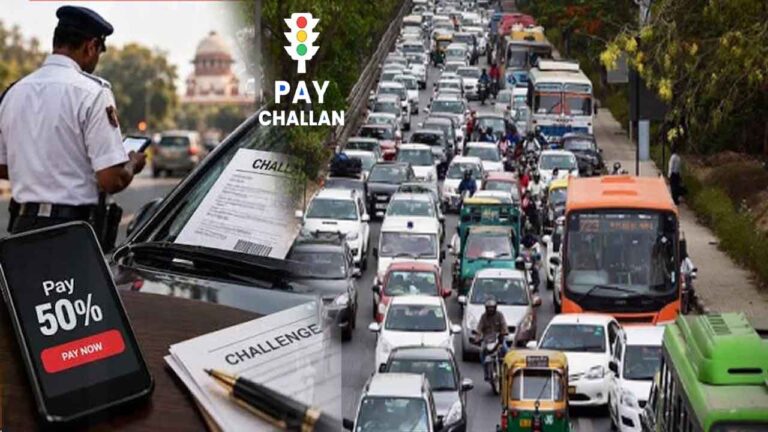
To ensure safe driving on the elevated road, an Advanced Traffic Management System (ATMS) has been installed. High-tech cameras will continuously monitor vehicle speed, and any violation beyond the prescribed limit will result in automatic online challans. Most of these cameras have already been installed along the stretch.
Instant Accident Alerts to Control Room
The elevated corridor will also be equipped with a Video Incident Detection System (VIDS). In the event of a road accident, the system will automatically alert the control room, enabling quick response and timely rescue operations. This work is also expected to be completed by December.
Delhi–Dehradun Elevated Road at a Glance
Total length: 12 km
Total budget: ₹1,500 crore
Total pillars: 575
Total cost of the entire expressway project: ₹11,970 crore
According to NHAI officials, the Delhi–Dehradun Expressway spans 213 kilometres and is being constructed in 11 packages, each overseen by different project offices of the authority.
Expressway Construction Packages
Akshardham (Delhi) to Delhi–Uttar Pradesh border (Part 1)
Akshardham (Delhi) to Delhi–Uttar Pradesh border (Part 2)
EPE Crossing to Saharanpur Bypass (Part 1)
EPE Crossing to Saharanpur Bypass (Part 2)
EPE Crossing to Saharanpur Bypass (Part 3)
EPE Crossing to Saharanpur Bypass (Part 4)
Saharanpur Bypass to Ganeshpur Access Controlled Road (Part 1)
Saharanpur Bypass to Ganeshpur Access Controlled Road (Part 2)
Ganeshpur to Dehradun (Part 1)
Ganeshpur to Dehradun (Part 2)
Ganeshpur to Dehradun (Part 3)
Key Features of the Expressway Project
- 5 Railway Over Bridges (ROBs)
- 110 Vehicle Underpasses
- 76 km of service roads
- 29 km of elevated road
- 16 entry and exit points
Once opened, the Delhi–Dehradun Expressway is set to redefine travel in North India—bringing cities closer, reducing travel stress, and offering a safer, faster, and greener journey for all.