



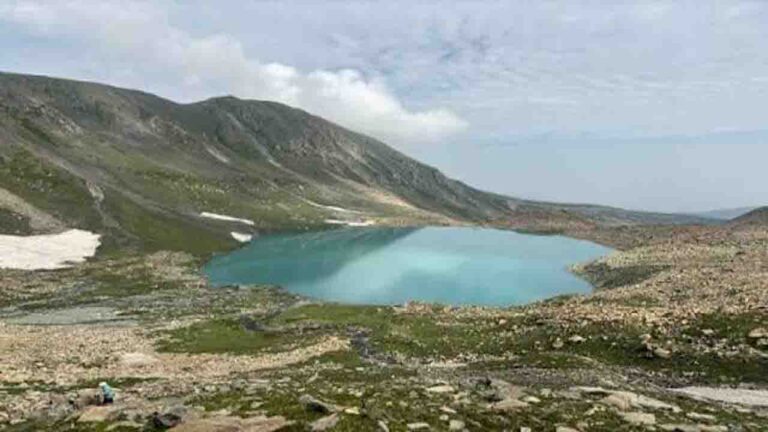

Shimla: Himachal Pradesh has identified 67 sensitive glacial lakes, several of them located in high-altitude regions, raising concerns over the possibility of sudden flooding if any of them burst.
The state government is working on installing early warning systems at four of the most dangerous lakes in Kinnaur and Lahaul-Spiti. However, the lack of network connectivity in these remote areas remains a major technical challenge.
Technology being explored for real-time data
Special Secretary for Disaster Management, Himachal Pradesh, Pushpinder Rana said on Saturday that the identified lakes are being monitored through satellite imagery and other scientific data to detect changes that could increase the risk of a sudden outburst.
The government is also exploring technology that can provide real-time data from locations where conventional communication networks are unavailable.



67 glacial lakes identified
Rana said the increasing number of vulnerable glacial lakes was a matter of concern. “We have identified 67 such lakes with an area of more than 10 hectares,” he said, adding that the government was analyzing available data to determine whether any of these lakes could develop conditions similar to those reported near the Nepal-Tibet border.
How can glacial lake floods cause devastation?
A glacial lake disaster occurs when accumulated water suddenly bursts and flows downstream, causing heavy damage to life and property.
Settlements located in valleys downstream can face significant risks. Such events are difficult to predict in high-altitude regions, making continuous monitoring of vulnerable lakes increasingly important.
Early warning systems pose technical challenges
Rana said dealing with such threats in difficult and remote locations would remain challenging until suitable technology was identified. Himachal Pradesh has submitted a proposal to the National Disaster Management Authority (NDMA) for developing early warning systems for these lakes.
Work has already begun under the National Landslide Mitigation Program for four vulnerable locations in Kinnaur and Lahaul-Spiti, with a focus on strengthening monitoring and early warning capabilities.
Four high-risk lakes under watch
The four vulnerable locations include Parchu Lake and vulnerable areas in Sangla-Kinnaur and Lahaul-Spiti. The project aims to detect dangerous changes in the lakes and issue warnings to populations living downstream.
However, installing an effective early warning system remains technically difficult because these locations are situated in extremely remote areas without network connectivity.
Key challenges remain
Deciding where and how sensors will be installed, and how data will be transmitted from these remote locations, are among the major challenges. The state government is working with C-DAC to address these technical issues.
Once approval is received from the NDMA, installation of early warning systems will begin at Deepang Ghat. The Himachal Pradesh government is also identifying downstream areas that could be affected by a sudden flood. Such vulnerable locations are being marked in the Deepang Ghat area.