



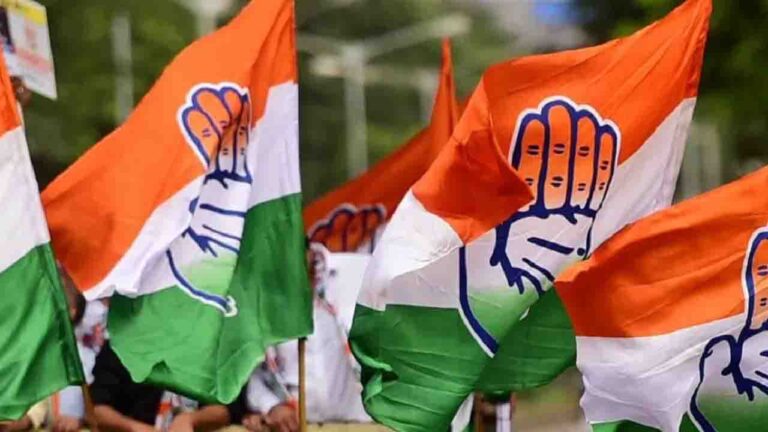

NEW DELHI: The Congress party on Saturday voiced cautious optimism regarding the commencement of high-stakes negotiations between the United States and Iran in Islamabad. While welcoming the potential for a durable peace process, the opposition launched a scathing critique of the Central government’s foreign policy.
Congress General Secretary Jairam Ramesh stated that while the meeting raises global hopes for stability between Washington and Tehran, such efforts must not be undermined by “Israel’s continuing aggression in its neighbourhood.” The statement comes at a time when the strategic Strait of Hormuz remains a focal point of regional tension.
The opposition leader raised sharp questions regarding the Prime Minister’s diplomatic style, which he termed “huglomacy.” Ramesh argued that recent geopolitical shifts have exposed a lack of substance in the government’s “Vishwaguru” narrative, particularly as India appears sidelined in key regional dialogues.
A primary concern raised by the Congress is Pakistan’s emergence as the host for these talks. Ramesh questioned how Islamabad managed to “carve out a new role for itself” despite its alleged involvement in the April 2025 Pahalgam terror attack and India’s subsequent efforts to isolate the neighbor diplomatically.
Drawing a comparison with the 2008 Mumbai terror attacks, Ramesh noted that the then Manmohan Singh-led government had “very effectively isolated Pakistan.” He contrasted this with the current scenario, where Washington has accorded Islamabad a renewed diplomatic role despite India’s extensive public diplomacy efforts.


The Congress also alleged that India has failed to secure strategic leverage from the United States. Ramesh claimed the government agreed to a “clearly one-sided trade deal” while receiving little in return, even as regional dynamics shift in favor of other players.
Criticism was further directed at India’s role within BRICS. Ramesh questioned why New Delhi did not utilize its leadership position in the grouping—which includes Iran, the UAE, and Saudi Arabia—to initiate peace or mediation efforts before the talks moved to Islamabad.
Regarding ties with China, the Congress leader referred to the past eighteen months as a period of “calibrated capitulation.” He linked this stance to Beijing’s continued support for Pakistan, specifically in the context of Islamabad’s response to Operation Sindoor and ongoing regional tensions.
The statement concluded by describing the Prime Minister’s recent visit to Israel as “ill-advised and ill-timed.” Ramesh called for an urgent restoration of stability in West Asia and a return to normalcy in the Strait of Hormuz, asserting that India has missed critical opportunities to assert its diplomatic leadership.