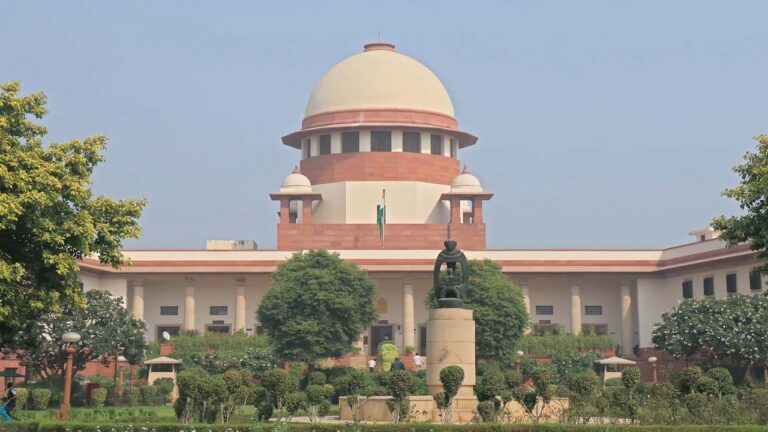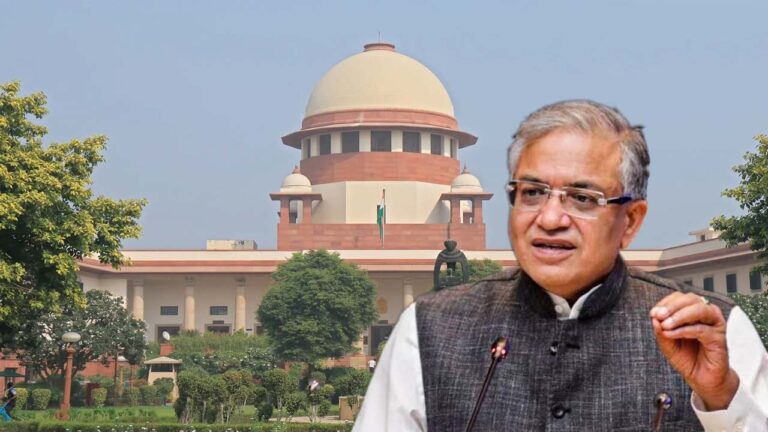

NEW DELHI: The Supreme Court has upheld the Election Commission’s Special Intensive Revision (SIR) exercise conducted in Bihar, ruling that the poll body acted within its constitutional and legal powers while ordering the large-scale verification of electoral rolls.
Disposing of multiple petitions filed against the exercise, including those by the NGO Association for Democratic Reforms, the apex court observed that the Election Commission had not violated any provision of the Representation of the People Act by directing the special revision of voter lists in Bihar. The court said the exercise helped improve the accuracy of electoral rolls and strengthened the foundation of free and fair elections.
With the verdict, the path has effectively been cleared for similar SIR exercises to be conducted across the country.
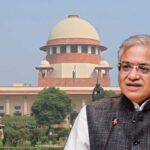
Delivering the judgment, Chief Justice Surya Kant said the petitions raised important constitutional and legal questions regarding the Election Commission’s authority under Article 324 of the Constitution and Section 21(3) of the Representation of the People Act, 1950.
The court noted that the decision to initiate the exercise in Bihar was taken due to major demographic changes, rapid urbanisation, migration, and significant additions and deletions in voter rolls over the years. According to the bench, the Election Commission began the process in Bihar as part of its constitutional duty to safeguard the integrity of the electoral process and ensure free and fair elections, with plans for a nationwide revision in the future.

Supreme Court Frames Three Key Questions
The bench said its analysis centered around three major issues:
1. Whether the Election Commission has the authority to conduct an exercise like SIR.
2. Whether the verification process under SIR serves a legitimate purpose and whether the measures adopted are proportionate to that objective.
3. Whether the procedure followed by the Commission violates any provision of the Representation of the People Act, 1950.
After examining arguments from all sides and reviewing the material placed on record, the court concluded that the Commission’s actions were legally valid and constitutionally justified.
‘Free and Fair Elections Depend on Accurate Voter Lists’
The Supreme Court emphasized that democracy relies not only on the act of voting but also on the integrity and reliability of electoral rolls.
The bench observed that reasons cited by the Election Commission — including the long gap since the previous intensive revision, large-scale migration, urban expansion, and the possibility of duplication and inaccuracies in voter lists — were directly linked to maintaining electoral purity.
The court further said that the objective behind the SIR exercise was closely connected to the constitutional goal of ensuring free and fair elections.
EC Has Power to Conduct SIR: Supreme Court
In a significant observation, the apex court held that the Election Commission was fully empowered to undertake the SIR process and had not violated any constitutional or statutory provision while doing so.
The bench also rejected arguments made by political parties and civil society groups that the exercise was exclusionary or that it automatically questioned the citizenship status of already registered voters.
According to the court, the process was intended to verify voter eligibility and maintain the accuracy of electoral rolls rather than strip citizens of their rights.
Names of Deleted Voters to Be Sent to Centre
The Supreme Court also directed the Election Commission to forward the names of individuals removed from the voter list on grounds of doubtful citizenship to the Union Home Ministry within four weeks.
The Centre, the court said, would then undertake a detailed process to determine citizenship status after providing adequate opportunity to the individuals concerned.
At the same time, the bench clarified that while the Election Commission may conduct a limited inquiry into citizenship for electoral purposes, it does not possess the authority to make a final determination on citizenship.
The court stressed that any decision taken by the Election Commission regarding inclusion or exclusion from voter rolls would neither be final nor amount to deprivation of citizenship rights.