
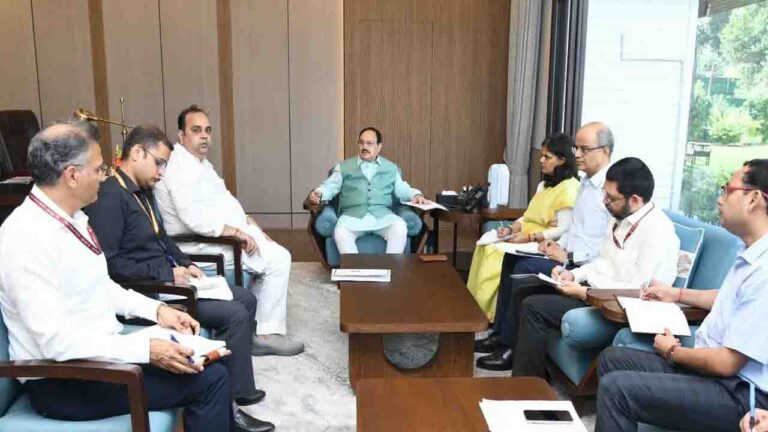
New Delhi: Union Minister for Health and Family Welfare JP Nadda on Friday chaired a high-level meeting to review the prevailing H1N1 influenza situation and healthcare preparedness across the country, with a primary focus on the national capital. Delhi Health Minister Pankaj Kumar Singh was also present during the review.
According to an official release, the Union Health Minister examined national surveillance mechanisms, epidemiological data, trends in Influenza-Like Illness (ILI) and Severe Acute Respiratory Infection (SARI), laboratory testing capacities, and the readiness of healthcare facilities to handle seasonal influenza cases.
During the meeting, Nadda stressed the necessity of continued vigilance, robust surveillance networks, and proactive measures to closely monitor changing influenza trends. The health authorities specifically evaluated the preparedness of medical infrastructure in Delhi, assessing the availability of hospital beds, critical care facilities, and essential medical supplies.
The review meeting comes against the backdrop of a reported uptick in swine flu cases across Delhi. Changing weather conditions in the national capital, characterized by high humidity and fluctuating temperatures, have created an environment conducive to the transmission of seasonal respiratory infections.
Health experts have urged citizens to stay alert for flu-like symptoms and seek timely medical consultation when necessary. H1N1, commonly known as swine flu, is a respiratory infection caused by the influenza A(H1N1) virus. Its typical symptoms include fever, cough, sore throat, body aches, headache, chills, and fatigue. Vulnerable populations face a higher risk of severe complications.

Highlighting the need for seamless cooperation, Nadda previously emphasized effective coordination between central and state authorities to manage seasonal and communicable illnesses. In July, he had similarly reviewed Delhi‘s dengue prevention measures, advocating for unified efforts among the Union government, the Delhi government, municipal agencies, healthcare facilities, and frontline workers.