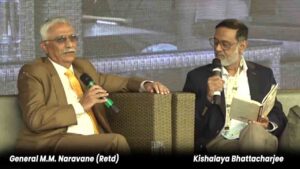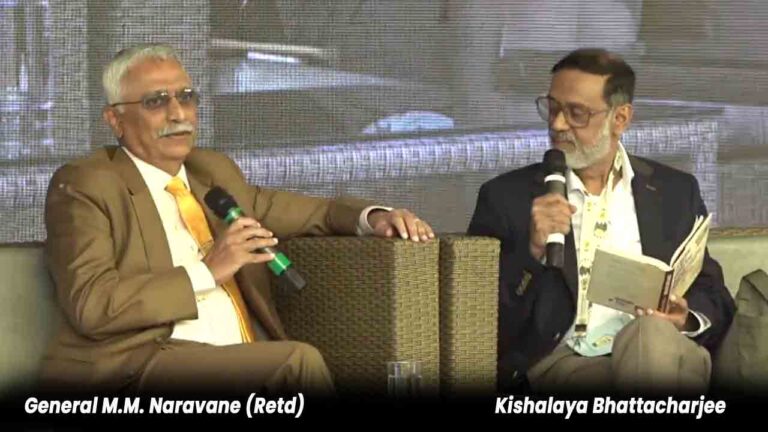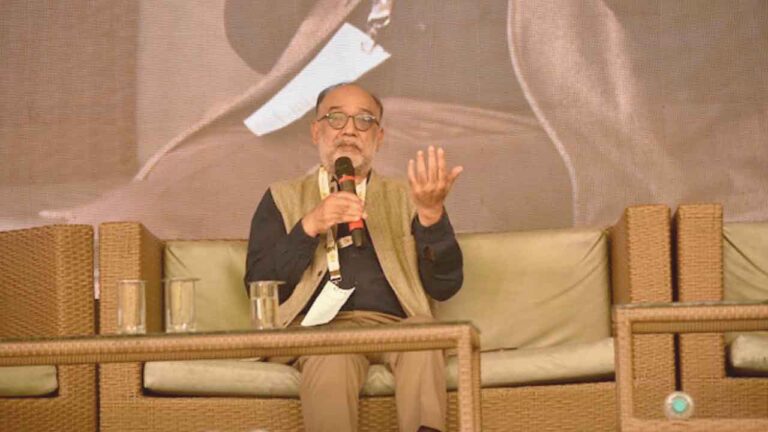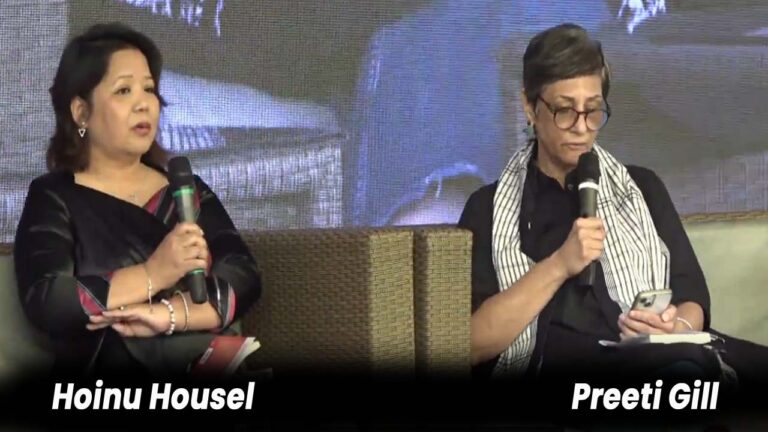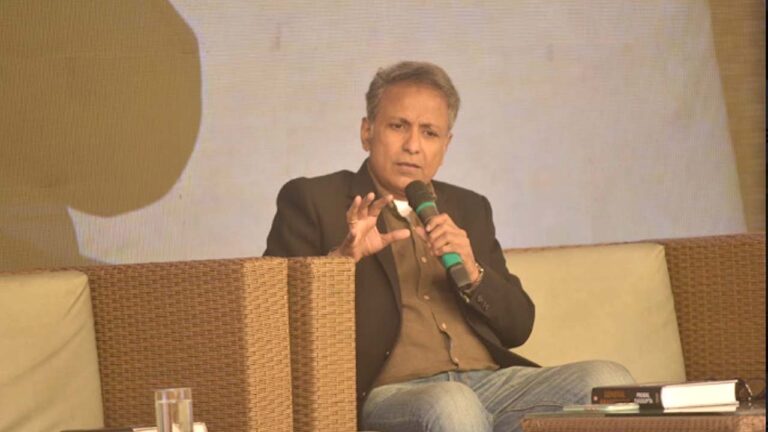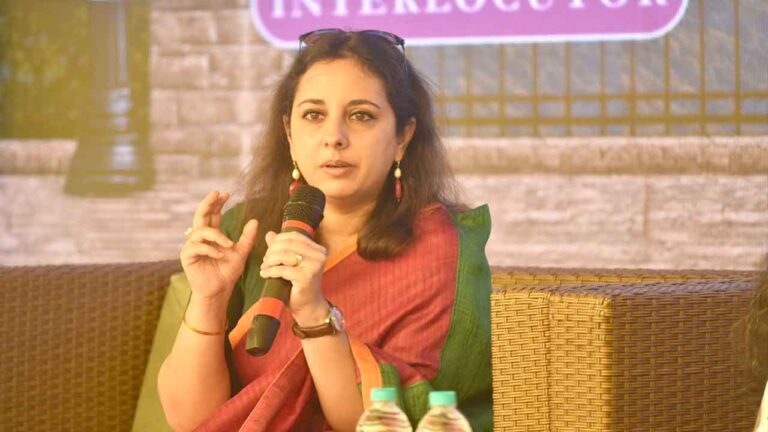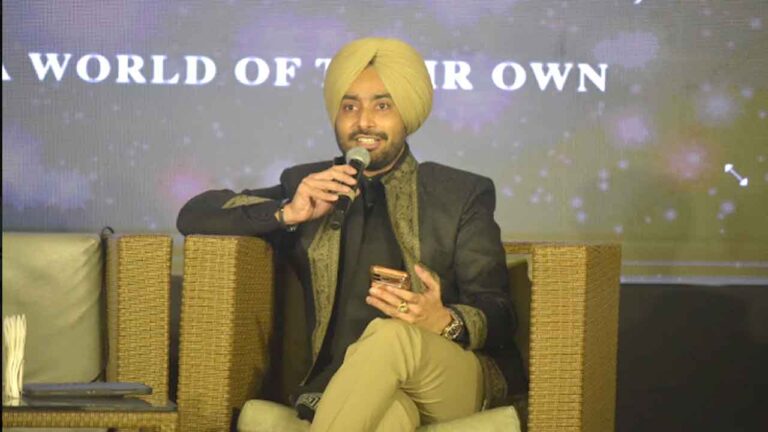

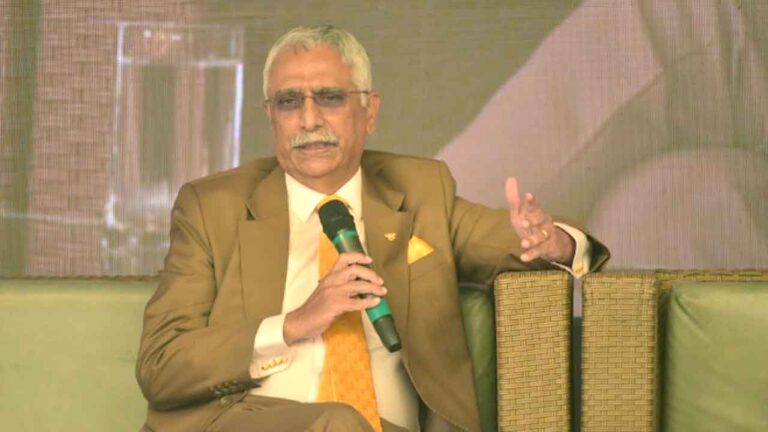
Kasauli: The 15th edition of the KSLF 2026 began at the Kasauli Club in Himachal Pradesh on Friday. Former Army chief General (Retd) Manoj Mukund Naravane launched ‘KSLF Forever Young’ before speaking to the media on a range of issues, including foreign policy, public protests, the Agnipath scheme, defence self-reliance and his book.
On international relations, Naravane said old alliances were breaking down, making it difficult to identify which countries would remain long-term friends. “An old friend is better than two new friends,” he said. He also compared society to a pressure cooker while discussing protests and demands for change in India. He warned that completely blocking the release of pressure could eventually lead to an explosion.
No Permanent Friends or Enemies in International Relations
Discussing global relations, Naravane said no country had permanent friends or enemies; only permanent interests mattered. Referring to Russia, he said India should remember which countries had stood by it during difficult times. Drawing a comparison with personal relationships, he said people often stand together during good times, but genuine support becomes clear during a crisis.
On relations with China, Naravane said not every situation should be viewed through the lens of hostility. India and China compete in trade, the economy and geopolitical influence, but such competition can also be positive. He compared the rivalry to two companies competing for a tender. One wins and the other loses, but that does not make them enemies.
Naravane said India should always remain open to dialogue with every country, including Pakistan and China. He pointed out that talks continued even when the United States was bombing Iran and while Russia and Ukraine remained at war. Whether through back channels or official channels, he said, the path to dialogue should always remain open. Asked whether India had failed to stand by Iran, a longstanding friend, Naravane acknowledged that the country was walking a diplomatic tightrope.

He referred to the upheaval in Nepal, Bangladesh and Sri Lanka over the past five years, along with multiple conflicts taking place simultaneously. Despite these challenges, he said, India’s economy continued to grow. “Everything cannot be wrong,” he said, adding, “I think we are doing a good job.”
Naravane Compares Public Protests to a Pressure Cooker
Commenting on continuing protests and demands for change in India, Naravane said people should have the freedom to express their views. He compared society to a pressure cooker and said completely blocking the release of steam would eventually cause it to explode. Protests should therefore be allowed, while the underlying causes of public dissatisfaction must also be examined and addressed.
However, he cautioned that taking to the streets did not mean every demand had to be accepted immediately. A defined legal process and appropriate channels were necessary to address grievances. Citizens have the right to express their views, he said, but they cannot act entirely according to their own wishes. On India’s diversity, Naravane said cultures and languages differed from north to south and east to west. He described this diversity as the country’s real strength.
Army Will Remain Apolitical, Says Former Chief
Responding to a question about public disillusionment with the political views of former military personnel, Naravane distinguished between the Army as an institution and individual soldiers. He said the Army was, is and would remain apolitical and would not interfere in politics.
However, he added that every soldier, as an individual, had the right to vote and could have personal political preferences. He also said people from different backgrounds served in the Army and were treated equally.
Agnipath Scheme Can Be Revised Based on Evidence
On the possibility of changes to the Agnipath scheme, Naravane said no policy anywhere in the world was 100 per cent correct. He stressed that policy changes should not be driven by emotions or pressure. Instead, decisions should be based on facts, figures and feedback from the field.
Referring to the Indian Constitution, he said that if the Constitution could be amended more than 100 times, policies and schemes could also be modified whenever necessary.
India Needs Greater Investment in Defence Research
Naravane acknowledged that the Army continued to import many items, although considerable progress had been made in domestic manufacturing. He said the time to become self-reliant had come 50 years ago, making the need even more urgent today.
According to him, India had not invested as much in research and development as it should have. As a result, the country was still trying to catch up. He stressed the need for research into advanced technologies and said India must anticipate its future requirements to reduce dependence on imports.
On the growing role of private companies in the defence sector, Naravane said the entry of civilian industries had accelerated progress. For decades, defence production had largely remained with public sector undertakings. However, major companies such as L&T, Adani Defence and Bharat Forge, along with startups such as Paras Defence, had entered the sector.
On government participation in the industry, he said private companies also needed business opportunities, making partnerships inevitable.
Naravane Says He Has Moved On From Controversial Book
During the media interaction, Naravane appeared reluctant to discuss his controversial book, Four Stars of Destiny. He referred to having written two books, saying he had already spoken about the first, Cantonment Conspiracy, and would discuss the second during his session scheduled for the following day.
Asked about the book that had generated considerable controversy, he said, “Leave the old things behind; one should look ahead.” When asked about the publisher’s response, Naravane reiterated that he had moved on. However, the book remains with the publisher.