
West Asia Crisis News: The ongoing turmoil in West Asia has emerged as a significant structural challenge for the Indian economy, putting the country’s balance of payments (BoP) under a “real stress test.” V. Anantha Nageswaran, the Chief Economic Advisor (CEA) to the Government of India, warned today that the crisis is not a temporary setback but a deep-seated disruption with direct consequences for inflation, current account management, and currency exchange rates.
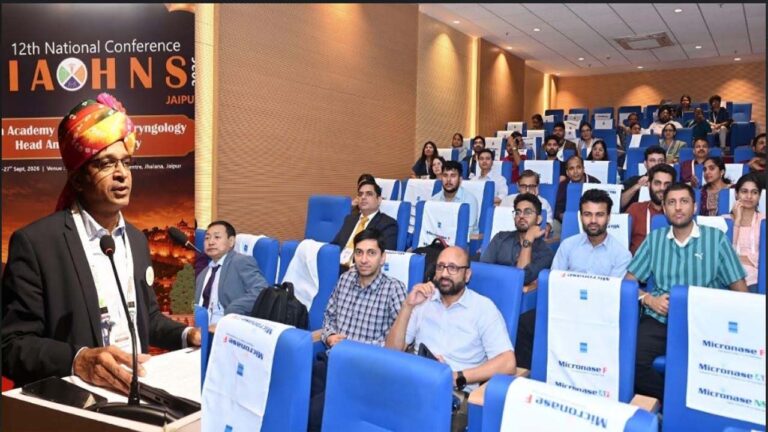
Speaking at the CII Annual Business Summit 2026, Nageswaran emphasized that managing the current account and preventing the depreciation of the rupee are the primary economic imperatives for the 2026-27 financial year. He noted that while India’s fiscal policies and infrastructure investments provide a strong foundation, the persistent nature of the conflict in critical global energy and commodity corridors is alarming.
Economic analysts have already begun revising their projections in light of these developments. Most economists have raised India’s Current Account Deficit (CAD) forecast for FY27, estimating it to fall within the range of 1.5% to 2.4% of the Gross Domestic Product (GDP). The CEA described India’s vulnerability to the region as “structural,” indicating that the impact will not simply vanish once the immediate conflict subsides.
The energy sector is bearing the brunt of the instability. Union Petroleum and Natural Gas Minister Hardeep Singh Puri revealed that oil marketing companies (OMCs) are currently incurring losses of ₹1,000 crore every single day. This mounting “under-recovery”—the gap between the cost of production and the retail selling price—could see total losses reach ₹1 lakh crore this quarter alone.
Minister Puri cautioned that the rapid pace of these losses could potentially wipe out the entire annual profit earned by these companies last year. While he clarified that fuel price decisions are not linked to elections, he did not rule out future price hikes if the pressure continues. However, he reassured the nation that India maintains a strategic buffer, with 60 days of crude oil and LNG, and 45 days of LPG requirements in reserve.



To further secure domestic needs, Indian refineries have significantly ramped up production. LPG output has been increased to 54,000 tonnes per day, a sharp rise from the pre-conflict level of 35,000 tonnes. This move is part of a broader strategy to maintain supply stability despite the volatile global environment.
On the trade front, Commerce and Industry Minister Piyush Goyal stated that the government is turning this crisis into a “golden opportunity” for Indian exports. Echoing Prime Minister Narendra Modi’s call for a shift from “business as usual,” Goyal announced an aggressive outreach plan. India will send 500 trade delegations over the next nine months, specifically targeting nations with which it has Free Trade Agreements (FTAs).
Goyal clarified that the Prime Minister’s recent appeal to curb foreign travel was aimed at leisure trips to save foreign exchange, not business-critical travel. He urged the industry to travel globally to secure export orders and bring in foreign investment, asserting that India has historically shown its best performance during times of global difficulty.