
Pune: The Maharashtra government has officially declared 265 talukas across the state as drought-affected following below-normal monsoon rainfall and prolonged dry spells. Covering nearly 74 percent of the state’s total 358 talukas, the designated regions have now been brought under emergency relief measures.
Chief Minister Devendra Fadnavis announced the decision following an extensive field visit to the impacted areas and a comprehensive situational review. Based on a detailed report submitted by the Maharashtra Agriculture Commissioner, the government issued an official resolution confirming that these 265 regions met the established “Trigger-1” criteria for drought declaration.
Under state norms, “Trigger-1” applies to regions that experience a continuous spell of 21 days without adequate rainfall during the monsoon season. Between June 1 and mid-September, Maharashtra recorded an overall precipitation deficit of 18.8 percent below normal. Several districts in the Marathwada, Pune, and Nashik divisions witnessed shortfalls touching nearly 30 percent, while agricultural hubs like Dharashiv, Amravati, Solapur, and Latur faced rainfall deficits of up to 50 percent.
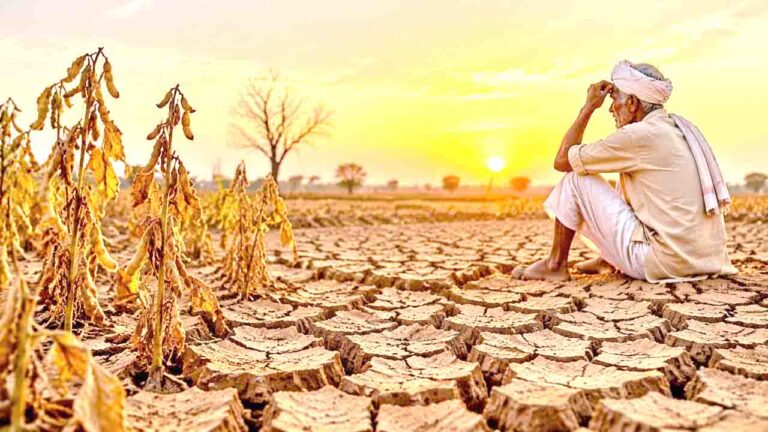
The prolonged moisture stress has severely impacted Kharif crops across the state. Major standing crops including soybean, cotton, pearl millet (bajra), maize, pigeon pea (tur), green gram (moong), and black gram (urad) have suffered widespread damage, threatening rural incomes and crop yields.
To mitigate the crisis, the state government has rolled out a relief package for farmers and rural laborers. The measures include the restructuring of existing crop loans and an immediate stay on the recovery of agricultural loans. The administration has also granted concessions on land revenue payments in all designated drought-hit regions.


In addition, the government has ordered concessions and relief on electricity bills for agricultural pumps, strictly prohibiting power disconnections for farmers’ pumps in these zones. School and college students in the affected regions will receive a complete waiver on examination fees.
To address immediate basic needs, authorities have directed district administrations to deploy water tankers immediately in villages facing acute drinking water shortages. Provisions for cattle fodder and livestock care are also being established. For landless agricultural laborers, rules under the Mahatma Gandhi National Rural Employment Guarantee Act (MGNREGA) will be relaxed to expand relief works and generate employment.
To ensure transparent compensation distribution, all District Collectors have been instructed to expedite crop loss assessment. The government has made geo-tagged photographs and GPS location tracking mandatory during the ground-level survey (panchanama) process.
The weak monsoon season has heightened concerns regarding reduced national agricultural output, falling rural purchasing power, and potential food inflation. India relies on the June-to-September monsoon for nearly 70 percent of its annual rainfall, with the current dry conditions compounded by strengthening El Niño patterns.