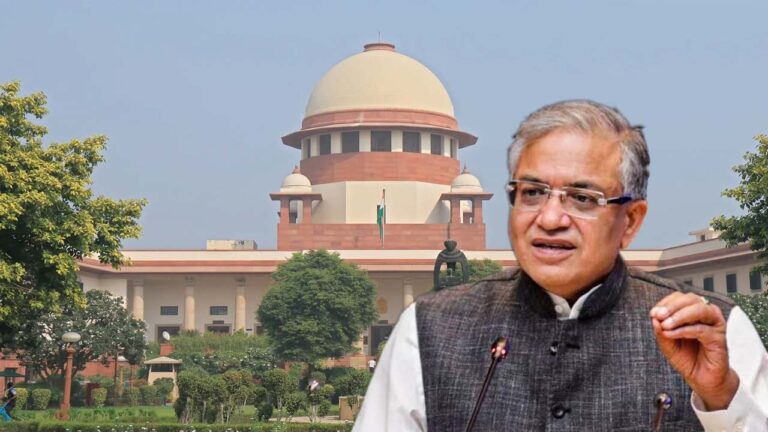


In a significant ruling, the Supreme Court of India on Wednesday declined to recognise hate speech and rumour-mongering as separate criminal offences under the penal law, stating that the current legal framework is adequate to deal with such acts.
A bench comprising Justices Vikram Nath and Sandeep Mehta emphasised that creating criminal offences falls strictly within the legislative domain. The judiciary, it noted, cannot direct Parliament to enact new laws, upholding the constitutional principle of separation of powers.
The petition was filed in 2021 by advocate and BJP leader Ashwini Kumar Upadhyay, who sought to declare hate speech a distinct offence. Over the years, the court has examined multiple cases related to hate speech, including incidents linked to the 2023 Haridwar Dharam Sansad, and had earlier issued interim directions mandating police to register cases.
Dismissing all related pleas, the court clarified that the issue is not the absence of law but its implementation. It observed that the argument of a “legislative vacuum” in dealing with hate speech is misplaced, as existing provisions are sufficient to address such offences.
The bench further highlighted that hate speech and rumour-mongering undermine the constitutional value of fraternity. However, it left the door open for the government to introduce amendments if deemed necessary.



Reinforcing accountability, the court reiterated that police authorities are duty-bound to register FIRs in cases involving cognisable offences, citing the landmark Lalita Kumari v. Government of Uttar Pradesh ruling. It also noted that aggrieved individuals can approach courts directly if police fail to act.
Clarifying legal procedures under the Bharatiya Nyaya Sanhita (BNS), the court said that prior sanction provisions apply at the stage of taking cognisance, not before registering an FIR. It added that magistrates are empowered to order FIR registration where necessary.
The court has directed that its judgment be circulated to all high courts, allowing them to frame appropriate guidelines to ensure effective implementation.