
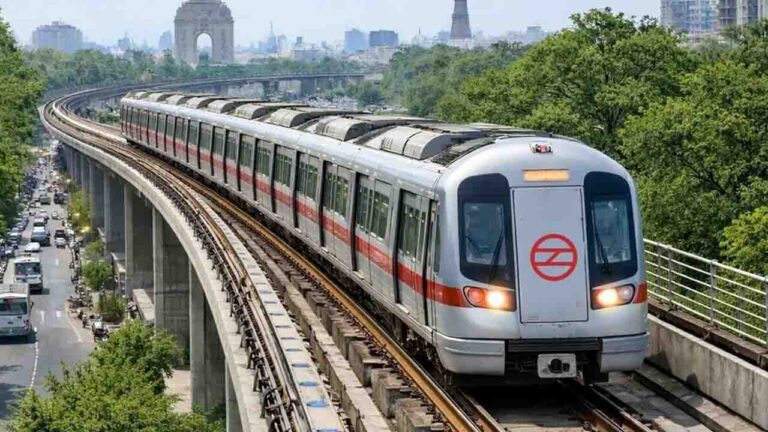
New Delhi: The Delhi Government, in collaboration with the Delhi Metro Rail Corporation (DMRC), has formulated a massive expansion blueprint under ‘Phase-5B’ to significantly widen the capital’s metro network. The plan proposes the development of seven new corridors spanning approximately 97 kilometres, featuring 65 new stations.
Chief Minister Rekha Gupta stated that the proposed project carries an estimated cost of around ₹48,000 crore. The primary objective is to bring metro connectivity to areas that have remained outside the network or suffer from limited access. According to officials, the Detailed Project Report (DPR) for the expansion has been prepared and is currently awaiting final approval.
The planning places a special focus on rapidly developing regions in Outer Delhi. Localities such as Narela, Najafgarh, Kheda Kalan, and Meethapur have been prioritised under the new routes. These corridors are designed to connect these peripheral areas directly with Central and South Delhi, promising significant relief for daily commuters.
To ensure swift execution, the government has placed four of the seven proposed corridors in the priority category. The target is to accelerate construction work on these stretches and make them operational before the year 2029. The remaining corridors will be developed in a subsequent phase of the project.
The Seven Proposed Corridors:



Dhansa Bus Stand – Nangloi (11.86 km, 9 stations): Links Najafgarh to the Green Line.
Central Secretariat – Kishangarh (15.97 km): Strengthens connectivity from Lutyens’ Delhi to Vasant Kunj.
Samaypur Badli – Narela (12.89 km, 8 stations): A Yellow Line extension bringing Narela firmly onto the metro map.
Kirti Nagar – Palam (9.96 km, 6 stations): A new link between Blue and Magenta Lines to decongest Ring Road.
Jorbagh – Saket/G-Block (16.99 km, 12 stations): Ensures direct access to interior parts of South Delhi.
Shastri Park – Mayur Vihar Phase-3 (13.2 km, 8 stations): Improves connectivity between East and North-East Delhi.
Keshavpuram – Rohini Sector-34 (16.29 km, 12 stations): Connects the outer sectors of Rohini to the metro for the first time.
This expansion is expected to reduce road traffic and pollution while boosting real estate in the newly connected regions. By balancing the transport system with the city’s urban sprawl, the project aims to transform the capital’s commuting landscape.