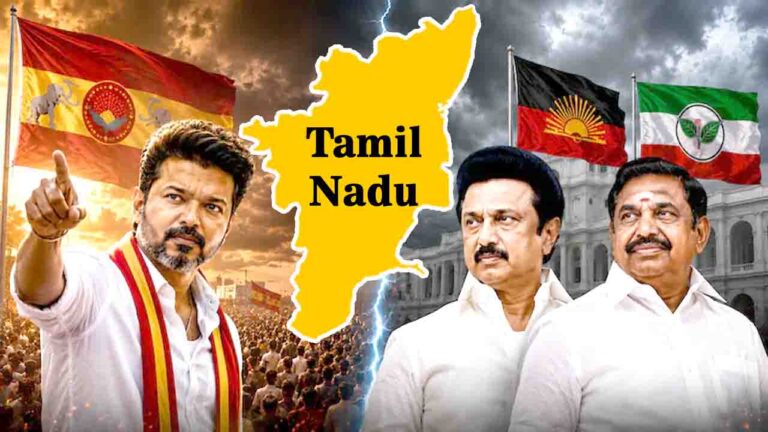

Tamil Nadu stands at a critical political juncture as actor-turned-politician Vijay’s party Tamilaga Vettri Kazhgam (TVK) emerges as the single largest party without a clear majority. The Assembly requires 118 seats for a majority out of 234 total members, but TVK won 108 seats, leaving a gap of 5-6 seats.
Vijay faces his real challenge not in winning seats but in ensuring government stability. TVK submitted signatures of 107 MLAs including Vijay to Governor Rajendra Vishwanath Arlekar claiming government formation rights. The party informed the Governor about Congress’s support for five MLAs but still needs additional backing to cross the majority mark.
Magic Number Gap: Can Vijay Bring Smaller Parties On Board?
Three smaller parties now hold the balance of power with six seats combined. Viduthalai Chiruthaigal Katchi (VCK), CPI and CPM each have two MLAs. TVK has formally sent letters to all three requesting support for government formation.
VCK confirmed receiving an official letter from TVK seeking support. A senior VCK leader stated the party will take its final decision during a high-level meeting in Chennai. The six seats from these three parties exactly match what TVK needs after Congress support.
Vijay’s political foundation rests on being “an alternative to Dravidian politics.” Forming alliances with major existing parties could send the wrong message to his supporters who expect a break from traditional Dravidian party dominance. This creates a dilemma for TVK’s leadership strategy.


DMK-AIADMK Equation: Old Enmity, New Fear?
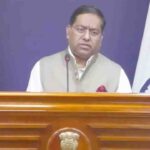
When asked about possible DMK-AIADMK alliance prospects against TVK, a senior VCK leader questioned why both Dravidian giants would not join forces to form a stable government when TVK poses a threat. The suggestion highlights growing concern among established parties about TVK’s rising influence.
For DMK and AIADMK, this contest has transformed into a battle for their very survival. The two parties, historically bitter rivals, now face common pressure from Vijay’s newcomer party. Their willingness to reconsider old differences depends entirely on TVK’s ability to form government independently.
Constitutional Deadlock: What Happens If No Government Forms?
The Indian Constitution provides clear provisions for hung Assembly situations. If no party proves majority, the Governor can invite the largest party leader (Vijay) to form government while giving time to prove majority on the Assembly floor. This is the first constitutional step in deadlock scenarios.
President’s Rule under Article 356: If the Governor becomes convinced no party can form a stable government, they may recommend President’s Rule in the state. This provision allows central administration when state governance becomes impossible through normal democratic processes.
Midterm Elections: If no coalition forms within six months of President’s Rule, fresh elections become the only remaining option. Tamil Nadu would then face midterm elections, making voters decide the political direction again after just experiencing one election cycle.
Governor’s Decision Looms Large
Governor Rajendra Vishwanath Arlekar now holds significant influence over Tamil Nadu’s political future. His approaches include inviting Vijay to attempt government formation or initiating Article 356 proceedings if instability appears unavoidable. The Governor’s timeline for decisions will shape next steps.
TVK’s position as the single largest party gives Vijay initial advantage but does not guarantee success. The six floating MLAs from VCK, CPI and CPM hold decisive votes that could determine whether Tamil Nadu gets a new regional government or returns to polls.
Wait-and-Watch Mode Dominates Tamil Nadu Politics
The state currently remains in wait-and-watch mode as all political players assess their positions. Whether Vijay proves skilled at coalition politics or veteran Dravidian parties unite to block him will become clear within days. The next few days will determine Tamil Nadu’s political future.
Vijay’s challenge extends beyond seat numbers to demonstrating political maturity in alliance-building. Established parties DMK and AIADMK now face existential threat requiring strategic reconsideration of their traditional rivalry versus accepting Vijay’s growing influence.
Public attention remains fixated on Chennai high-level meetings where VCK will finalize its decision. CPI and CPM positions remain equally crucial as their combined strength matches TVK’s exact requirement. Every party’s announcement timing could trigger cascading political shifts.