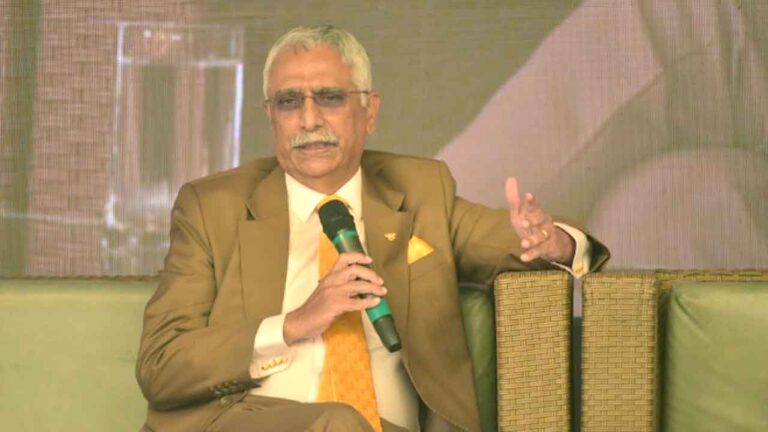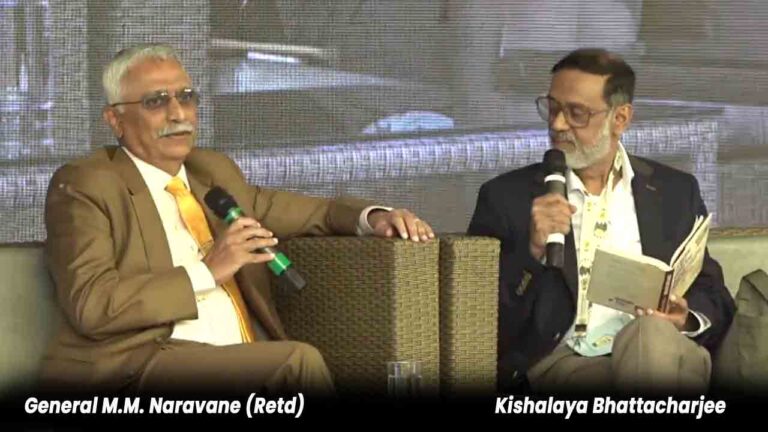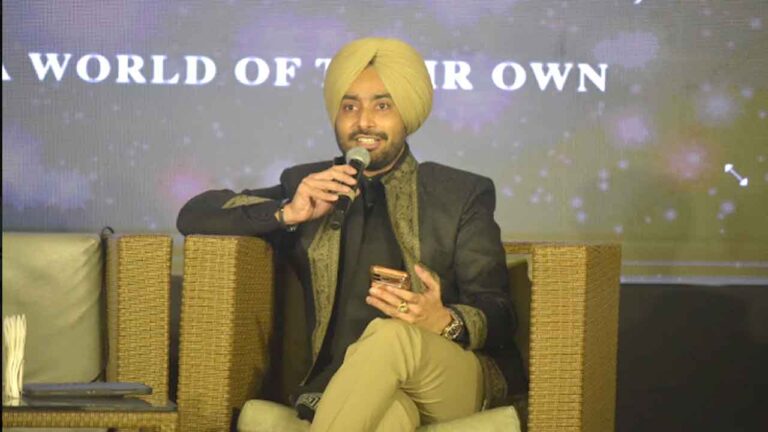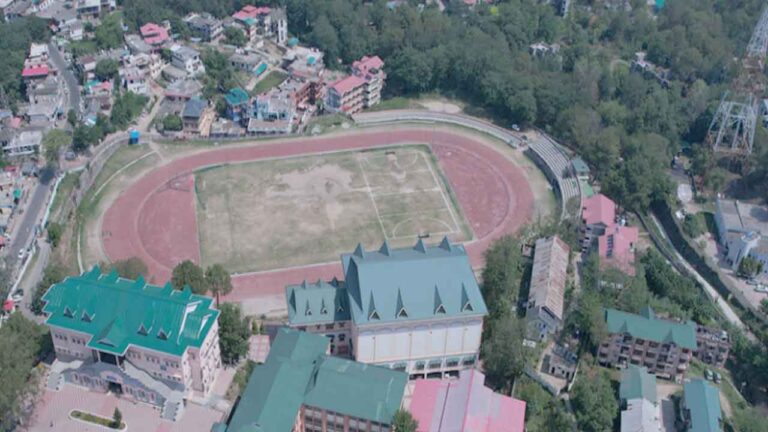

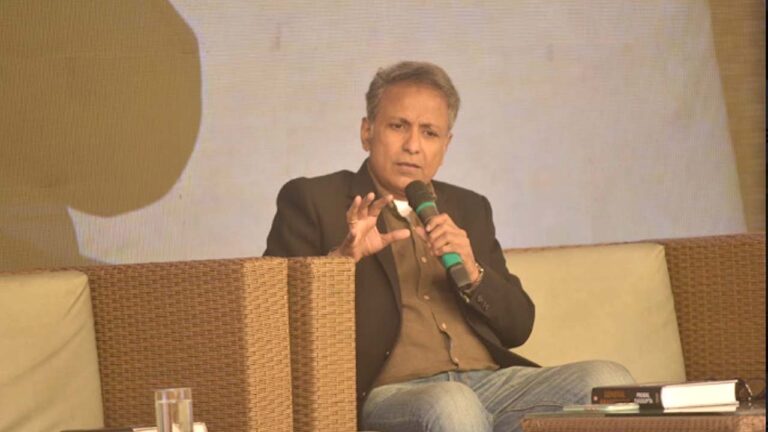
Kasauli: The final day of the 15th Khushwant Singh Lit Fest 2026 at the historic Kasauli Club featured a special session on the life and military career of former Indian Army chief General Krishnaswamy Sundarji. His biographer, Probal Dasgupta, discussed major historical events of the 1980s, offering insights into decisions that shaped India’s military and political landscape.
General Sundarji served as Chief of the Army Staff from February 1, 1986, to May 31, 1988. Dasgupta, while discussing his biography, examined the political decisions behind Operation Blue Star, the Bofors controversy, Operation Brasstacks and India’s intervention in Sri Lanka.
Congress Wanted to Promote Bhindranwale, Claims Biographer
Dasgupta claimed that in the late 1970s, as Indira Gandhi sought to return to power, Giani Zail Singh and Sanjay Gandhi wanted to promote a new political leader in Punjab. According to him, Jarnail Singh Bhindranwale, a young man from Moga, was encouraged as part of that effort.
Dasgupta said he possessed receipts from a Chandigarh hotel where Bhindranwale had been hosted. He argued that Bhindranwale eventually became a “Frankenstein’s monster” for the Congress government, turning into a force that the government had never anticipated.
He described Operation Blue Star as “more a political failure than a military operation”, highlighting the political and administrative failures that preceded the military action.


Operation Blue Star Exposed Administrative Failure
Dasgupta recalled the killing of Punjab DIG Avtar Singh Atwal on the steps of the Golden Temple in 1983. He said Atwal’s body could not be removed for six hours, describing the incident as evidence of the administration’s collapse at the time.
According to Dasgupta, weapons and militants continued to gather inside the Golden Temple complex for months, pointing to a major intelligence failure. He said the police, intelligence agencies, Army and government were not working on the same lines, and there was no coordinated national approach to the crisis. Eventually, the entire responsibility for the operation fell on the Army.
He said the military faced two options: surround the complex or launch a direct assault. A siege, he explained, carried the risk of a declaration of Khalistan and a march by supporters towards Amritsar. Dasgupta also held General Sundarji responsible for bypassing military protocol. Instead of going through the then Army chief, General Vaidya, Sundarji spoke directly to Indira Gandhi, paving the way for the operation.
He said the heavy shelling left a deep wound in the country’s social fabric. Dasgupta also recalled that writer Khushwant Singh had urged Sundarji to put his account of Operation Blue Star in writing. However, Sundarji died only a few years after his retirement.
Bofors: “The Gun Was Right, the Deal Was Wrong”
Discussing the Bofors controversy, Dasgupta said four artillery guns were shortlisted in 1981: an Austrian gun, the French Sofma, Bofors and a British gun.
He said the Austrian gun was eliminated after its barrel burst, while the French gun dropped out of contention because the United States was supplying Pakistan with gun-locating radar. According to Dasgupta, Bofors was not an inferior gun. General Sundarji’s position was clear: “The gun was right, but the deal was wrong.”
Dasgupta said Sundarji had sent a note to Defence Secretary S.K. Bhatnagar, asking him to tell the Prime Minister to question the Bofors company about whom it had bribed. However, the government did not disclose the names. Arun Singh, who served as Minister of State for Defence in the Rajiv Gandhi government, resigned from his post.
Dasgupta described Sundarji as “above reproach” in the controversy, while acknowledging that some people associated with the deal had criticised his decisions.
Operation Brasstacks Was a Chance to Stop Pakistan’s Nuclear Ambitions
Dasgupta described Operation Brasstacks as an exercise four times larger than a NATO military exercise, involving around five lakh soldiers. He said the exercise also involved the idea of moving through the Rajasthan desert towards Pakistan’s Kahuta nuclear facility.
In his assessment, India may have missed its “last chance” to prevent Pakistan from becoming a nuclear power. However, Dasgupta clarified that there was no formal plan to enter Pakistan. Rather, one interpretation was that the military build-up could provoke Pakistan into taking the first step.
Sri Lanka Policy: “Everyone Made the Wrong Decisions”
Dasgupta was sharply critical of General Sundarji over Sri Lanka and the Indian Peace Keeping Force (IPKF) intervention. He argued that the Prime Minister, military leadership and other stakeholders all made wrong decisions. According to him, the Tamil, Sinhalese and different Indian government institutions were operating on separate tracks rather than following a coordinated approach.
Dasgupta said Velupillai Prabhakaran had been brought to India and introduced to then Prime Minister Rajiv Gandhi. He recalled that Gandhi gifted Prabhakaran a bulletproof jacket when he returned from Delhi. Four years later, Rajiv Gandhi was assassinated on Prabhakaran’s orders. Dasgupta suggested that the earlier decision was a grave mistake, one that preceded the loss of a former Prime Minister.
Diaries, Interviews Formed the Basis of Sundarji’s Biography
Dasgupta said the biography drew on Sundarji’s diaries from his youth, conversations with his niece Aruna Roy, and interviews with diplomats, generals and senior journalists who had worked with him. His aim, he said, was to take the story beyond military circles and make it accessible to general readers.
On caste dynamics within Army regiments, Dasgupta said the regimental system was built around tradition and the fighting spirit. At the brigade and Army levels, he added, personnel from different regiments work together as an integrated force. The session examined the political and military decisions of the 1980s through Sundarji’s career, covering some of the most consequential episodes in India’s recent history.