



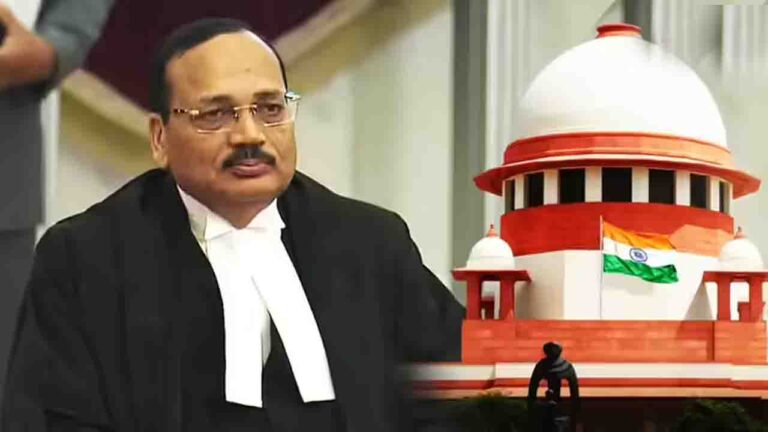

Uniform Civil Code SC Hearing: The Chief Justice of India (CJI), Surya Kant, has unequivocally clarified the country’s constitutional stance and the Supreme Court’s perspective regarding the Uniform Civil Code (UCC). During a significant hearing, the CJI stated in no uncertain terms that the Uniform Civil Code is a primary objective of our Constitution and should not be viewed through the prism of any specific religion.
According to a report published in *Navbharat Times*, the Supreme Court was hearing a writ petition on Thursday concerning the inheritance rights of Muslim women. During these proceedings, while responding to a remark made by the petitioner’s counsel, Prashant Bhushan, the Chief Justice underscored the constitutional ethos. The Bench clarified that the objective of the UCC is not to target any specific religion, but rather to realize constitutional goals.
During the hearing, counsel Prashant Bhushan argued that, ideally, there should be a uniform code of conduct governing the inheritance rights of all religions. However, he added that there is a prevailing apprehension within the Muslim community that the proposed Uniform Civil Code could be used to impose the Hindu Civil Code upon them.
Amidst this serious discussion, Justice Joymalya Bagchi—a member of the Bench—raised questions regarding society’s mental preparedness. Justice Bagchi remarked that while the answer itself lies within the Constitution, the real question is whether our society is fully prepared for such a change. He also placed special emphasis on the importance of Fundamental Duties.
Justice Bagchi further stated that it is imperative to cultivate a scientific, rational, and humanistic outlook within the country, as enshrined in our Fundamental Duties. Responding to this, Prashant Bhushan expressed concern, noting that current circumstances appear to be moving in the opposite direction. After hearing these arguments, the Court issued a notice to the Central Government, seeking a response on the entire matter.



Essentially, this case stems from a writ petition filed under Article 32 of the Constitution by advocate Poulomi Pavini Shukla, in collaboration with the ‘Nyay Nari Foundation’. The petition characterizes Muslim Personal Law as discriminatory with regard to the inheritance rights of Muslim women. The petitioners argue that the current framework violates women’s right to equality.
A bench comprising CJI Suryakant, Justice Joymalya Bagchi, and Justice Vipul Pancholi is hearing this significant matter. Notably, during the hearing of this very case in March, the Chief Justice had already made his stance clear. At that time, he had stated that the ‘Uniform Civil Code’ is the sole solution to such legal lacunae and discrimination.