
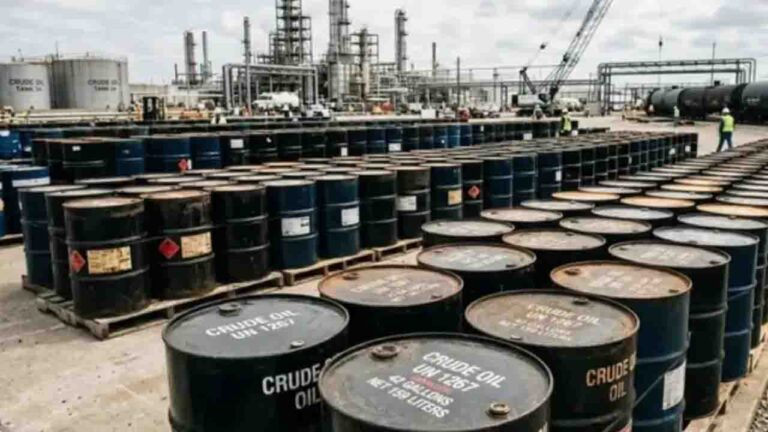

WASHINGTON: The Donald Trump administration has reversed course on recent energy policy by granting a temporary waiver for countries to purchase Russian oil and petroleum products via maritime routes. The relief, which will remain in effect for approximately one month, comes only two days after officials suggested that such waivers would not be extended.
According to the official license released late Friday by the U.S. Treasury Department, countries are permitted to complete the purchase and delivery of Russian crude and petroleum products, provided the cargo was loaded onto vessels by April 17, 2026. All such transactions must be finalized by May 16, 2026.
The Indian government has maintained its stance, asserting that it will continue to prioritize its domestic energy requirements. New Delhi has consistently employed a balanced strategy regarding energy imports, ensuring that its procurement of crude oil and LPG remains unaffected by shifting geopolitical regulations.
Analysts view this move as a strategic effort to stabilize global energy prices. Recent geopolitical tensions involving the United States, Israel, and Iran have exerted upward pressure on international oil markets. The new U.S. directive specifically excludes any transactions involving Iran, Cuba, or North Korea.
Earlier this week, Treasury Secretary Scott Bessent had signaled that the expiration of existing waivers for Russian and Iranian oil would not be delayed. Secretary Bessent had previously noted that similar waivers for Iranian oil had successfully introduced approximately 140 million barrels into the global market, effectively easing supply-side constraints.



According to Kirill Dmitriev, an envoy for the Russian President, this latest regulatory adjustment could facilitate the movement of nearly 100 million barrels of Russian crude into the global market—an amount roughly equivalent to one day of global production.
Energy experts suggest that while this temporary relief will provide a marginal increase in global supply, a significant decline in international petroleum prices remains unlikely in the near term.