
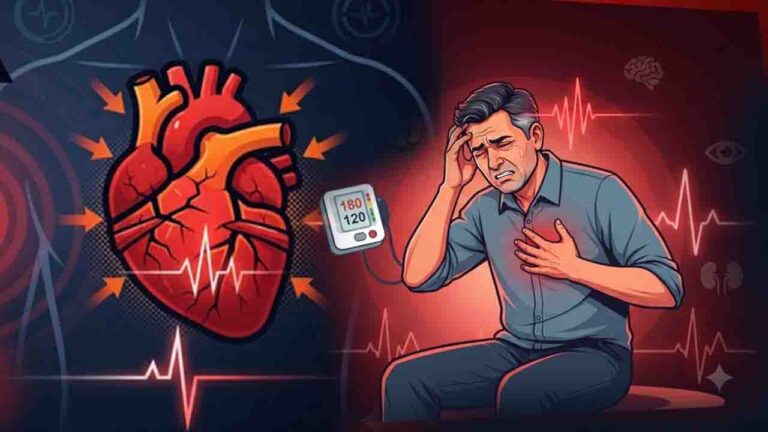
Silent Killer Alert: High blood pressure, or hypertension, is frequently misunderstood. Many believe the body immediately signals when blood pressure spikes, but that is not always the case. According to the World Health Organization (WHO), most people with high blood pressure show no clear symptoms, and the condition is often only detected through routine checks. This lack of visible signs is precisely why hypertension is referred to as a “silent killer.”
Leaving high blood pressure uncontrolled over a long period significantly increases the risk of severe damage to the heart, brain, and kidneys. Recognizing subtle warning signs and getting timely checkups can prevent serious complications.
Early Symptoms of High Blood Pressure
1. Severe Headache
A sudden, intense headache can occur during a sharp rise in blood pressure. If a headache is accompanied by vision changes or dizziness, it should not be ignored. However, having a headache alone does not automatically mean a person has high blood pressure.
2. Dizziness
When blood pressure reaches exceptionally high levels, individuals may experience dizziness, weakness, or discomfort. If dizziness is paired with blurred vision, confusion, or difficulty walking, immediate medical evaluation is necessary.
3. Blurred Vision
Extremely high blood pressure can impact the eyes and blood vessels, leading to blurred vision or sudden changes in eyesight. Sudden changes in vision should never be dismissed as a minor issue.

4. Chest Pain
Chest pain serves as a critical warning sign in severe hypertension cases. Prolonged high blood pressure damages the heart and blood vessels, elevating the risk of conditions like a heart attack. Anyone experiencing chest pain should seek prompt medical assistance rather than attempting self-diagnosis.
5. Difficulty Breathing
Shortness of breath or breathing difficulties can occur alongside severely elevated blood pressure. When shortness of breath is combined with chest pain, dizziness, or weakness, it can indicate a serious medical situation.
6. Nausea or Vomiting
In cases of extreme blood pressure spikes, some individuals may feel nauseous or vomit. Immediate medical intervention is required if nausea is accompanied by severe headaches, vision changes, confusion, or chest pain.
When to See a Doctor
Immediate medical attention is crucial if a blood pressure reading reaches 180/120 mmHg or higher and is accompanied by severe headache, chest pain, difficulty breathing, vision changes, confusion, nausea, or vomiting.
The absence of symptoms does not guarantee normal blood pressure. Regular monitoring remains the only reliable method to detect high blood pressure early.
Note: This article has been prepared based on medical reports.