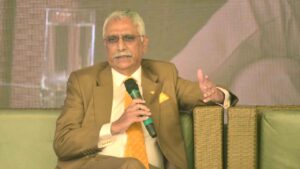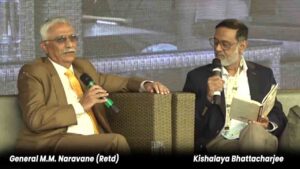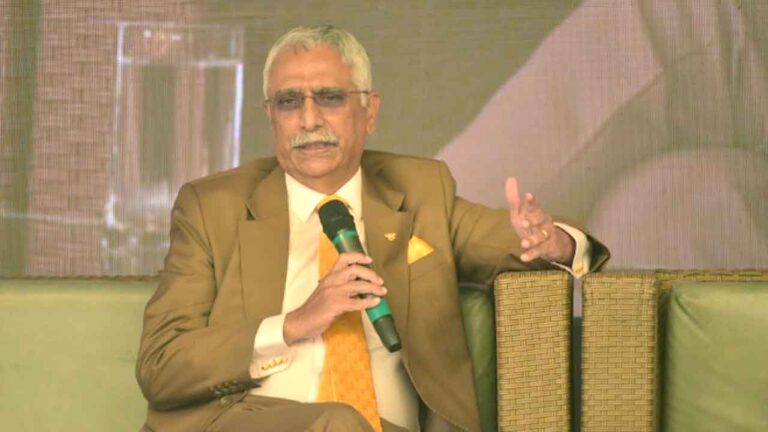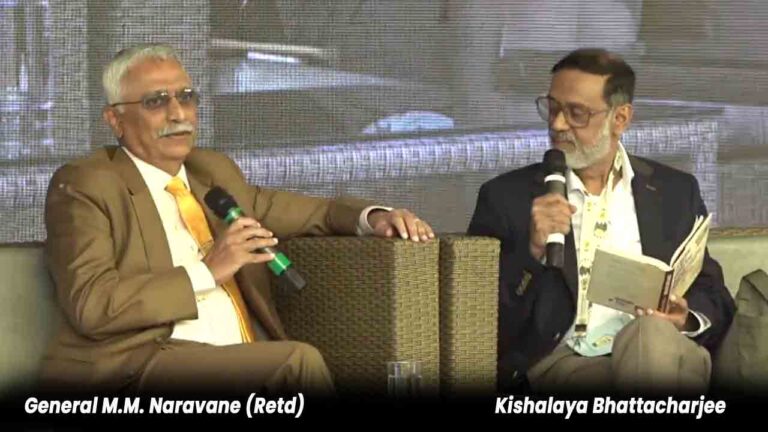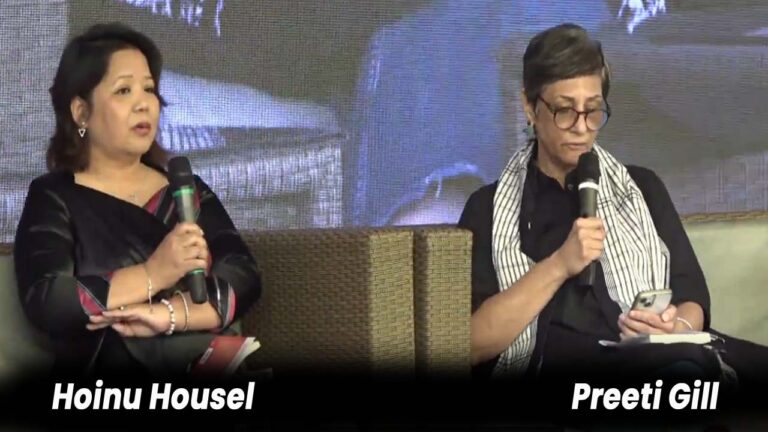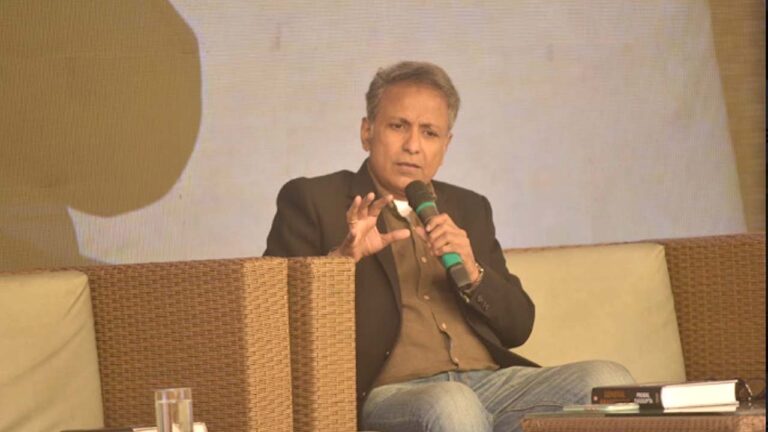

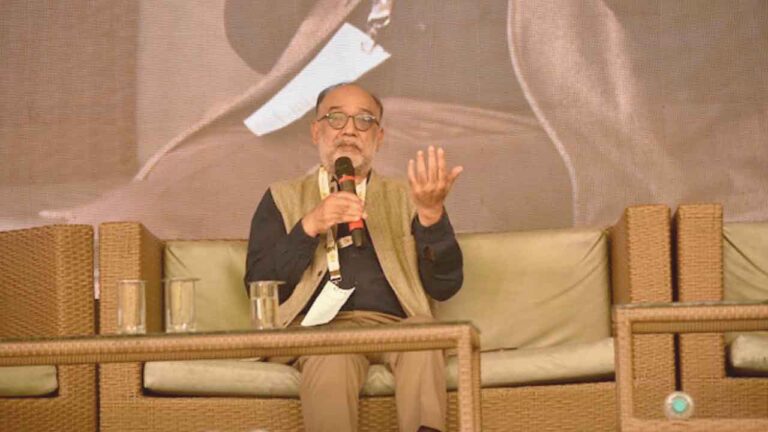
Kasauli: Author and Northeast affairs expert Sanjoy Hazarika discussed Mizoram’s history, its transition from insurgency to democratic politics, and the challenges facing the region during a session titled “From Battlefield to Ballot Box” at the Khuswant Singh Lit Fest 2026 in Kasauli, Himachal Pradesh.
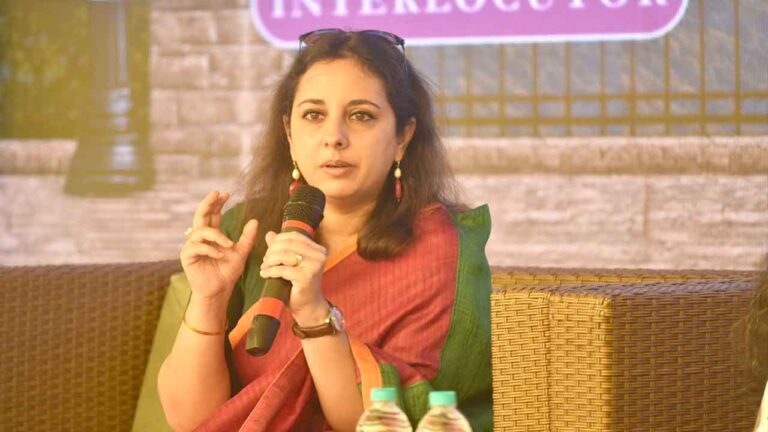
In a conversation with editor and publisher Preeti Gill, Hazarika said the achievements of peace and harmony deserved to be celebrated in the same way as other major historical events. He expressed regret that the 40th anniversary of the Mizoram Peace Accord had not received similar attention outside the state.
Hazarika said Mizoram’s history should not be viewed only through the lens of insurgency, violence and national security. Drawing on his long experience of studying the Northeast, he said the approach in New Delhi had often remained limited to security concerns, overlooking the region’s people, society and lived experiences.
From the 1966 Insurgency to Four Decades of Peace
Hazarika recalled that an insurgency broke out in the Mizo Hills in 1966, when the area was known as the Mizo Hills district. The Mizo National Front (MNF) took control of almost the entire area during the uprising.
The Mizo Peace Accord was signed in 1986 and remains intact four decades later. Hazarika said the anniversary offered an opportunity to recognise Mizoram’s journey from conflict to lasting peace. He regretted that the milestone had not been celebrated beyond the state and questioned why the Northeast continued to be viewed primarily through the prism of security, insurgency and violence.


According to Hazarika, the experience of Mizoram offers important lessons about how a region can move from armed conflict towards peace and democratic politics. He said these aspects of the state’s history needed to reach a wider national audience.
Lalthanhawla’s Biography Offers a Window into Mizoram’s History
Hazarika also discussed his book on former Mizoram Chief Minister Lalthanhawla, explaining how the leader’s life reflected the state’s wider political and social transformation.
Lalthanhawla was associated with the Mizo National Front before later joining the Congress. His political journey included conflict, imprisonment, family challenges and changes in power, offering insights into Mizoram’s contemporary history.
Hazarika said he had known Lalthanhawla for a long time and interviewed him around 200 times while preparing the biography. He also spoke to members of his family, friends and political opponents to present a broader account of the leader’s life.
He stressed that a biography should not rely solely on the subject’s own perspective. Understanding the experiences of people around the individual, including political opponents, was equally important to building a comprehensive account.
Balancing Centre-State Relations and Development
Discussing the economic and infrastructure challenges faced by smaller northeastern states, Hazarika said many of them depended on financial assistance from the Centre for development. He said chief ministers in such states needed to maintain good relations with the Union government while firmly advocating for their state’s interests.
Lalthanhawla, he said, had considerable experience in dealing with the Centre and building political relationships. He worked with five prime ministers, from Indira Gandhi to Narendra Modi. Hazarika recalled an incident during a Planning Commission meeting when Lalthanhawla disagreed with Montek Singh Ahluwalia, walked out and returned only after securing his demand.
Mizoram is now counted among the fully literate states, Hazarika said. He added that leaders of smaller states faced the challenge of securing resources from the Centre while maintaining their political credibility at home. Balancing state interests with the trust of local people remained crucial, he said.
Why Mizoram Refused to Turn Away Refugees from Myanmar
One of the key discussions focused on Mizoram’s response to refugees fleeing conflict in neighbouring Myanmar. Hazarika said around 50,000 people had arrived in Mizoram after fleeing clashes between Myanmar’s military and rebel groups. For a state with a population of barely one million, the influx was substantial.
Successive state governments provided support and assurances of safety over several years. Local residents opened their homes to the refugees, while land was made available for camps in some places. Hazarika said the Centre had earlier conveyed that the state should identify the people and send them back, describing them as illegal migrants rather than refugees.
The then Mizoram Chief Minister Zoramthanga rejected that approach, saying, “India is known as a democracy. This is happening before us. We cannot turn our backs on these people.” Hazarika noted that India was not a signatory to the international refugee convention, yet Mizoram adopted a position that refused to push the refugees back.
He explained that many Mizo people considered themselves part of a wider community extending across international borders, with family ties, marriages and property connections on both sides.
A Cultural Landscape Beyond International Borders
During the session, Hazarika also recounted an account by Lieutenant General Shokin Chauhan, a former chief of the Assam Rifles, concerning Lalthanhawla’s response to security concerns along the Myanmar border.
According to the account, Chauhan had approached Lalthanhawla to inform him about the growing arrival of Chin refugees and the possibility of Rohingya refugees entering Mizoram. Chauhan viewed the situation as a legitimate security concern along a sensitive international border.
Hazarika said Lalthanhawla responded by questioning how Mizo people could be asked not to help their own brothers. Chauhan later wrote that Lalthanhawla showed him sacred forests and stones associated with Mizo traditions that lay across the border in Myanmar’s Chin State.
“I was looking at an international border, he was looking at a cultural landscape,” Chauhan wrote. Hazarika said India’s 1,643-km-long border with Myanmar received little public attention despite its sensitivity and the movement of narcotics across it.
He added that the Mizo, Zo and Kuki communities shared connections across borders. However, he said the idea of these communities forming a single nation was not something political leaders genuinely wanted to pursue, as nations regarded territory as integral to their existence. Referring briefly to Manipur, Hazarika said several thousand Kukis had sought refuge in Myanmar and Mizoram, and many later returned.
Rajiv Gandhi’s Mizoram Visit: A Road Trip and a Television Tower
The session also featured anecdotes about former Prime Minister Rajiv Gandhi’s visit to Mizoram. Hazarika recalled that after the inauguration of the state, Rajiv Gandhi took a break with his family, including Sonia, Rahul and Priyanka Gandhi.
During a road trip, he drove at high speed while listening to music by bands such as the Eagles and the Beatles. Sonia Gandhi, who was sitting behind him, reportedly asked him to slow down. According to Hazarika, Mani Shankar Aiyar had described the journey as one of Rajiv Gandhi’s most carefree and relaxed road trips.
Another anecdote concerned a local resident who refused to believe that Rajiv Gandhi was India’s prime minister because he did not have a moustache. Hazarika explained that the area received Bangladesh Television instead of Indian Doordarshan. Viewers were familiar with General Ershad, who had a moustache, leading to the confusion.
Once the issue came to light, Rajiv Gandhi immediately directed officials to install a Doordarshan tower in Mizoram. The anecdotes offered a glimpse into the region’s political and social history, complementing the broader discussion on peace, identity and the transition from insurgency to democratic governance.