
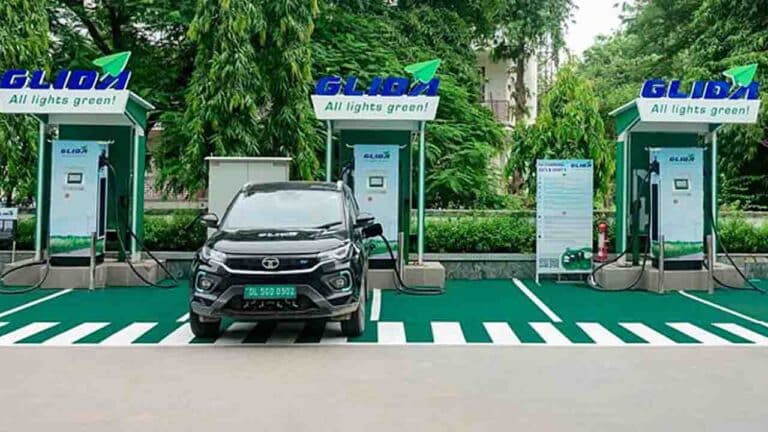
Electric Vehicle Growth Charging Infrastructure Crisis: The dream of a seamless electric transition in India is facing a harsh reality check. According to a report Dilip Yadav, an EV owner from Gurugram, recently discovered that buying an electric car is often the easiest part of the journey.
After moving to a new apartment complex, he found himself banned from installing a personal charger in the basement. With no public stations nearby, his daily routine collapsed under the weight of long queues at his office charger. Ultimately, he had to resort to a mobile EV charging van just to keep his vehicle running.
Yadav’s ordeal is not an isolated incident; it represents a systemic failure in India’s electric vehicle (EV) transition. While the desire to go green is high, the supporting infrastructure remains fragmented, unreliable, and largely inaccessible to the average urban dweller.
Surging Sales Meet Infrastructure Bottlenecks
The data for April 2026 paints a picture of a booming market. According to Federation of Automotive Dealers Associations (FADA) figures, electric passenger vehicle sales surged by 75.1% year-on-year, reaching 23,506 units. Electric two-wheelers saw a 60.7% rise with nearly 149,000 units sold, while three-wheelers also maintained a steady growth of 3.3%.
However, this rapid adoption has shifted the focus from demand to the resilience of the charging grid. Navneet Daga, CEO of Zenergize, notes that the challenge isn’t just installing hardware. The real test lies in maintaining performance under India’s extreme heat and fluctuating power supply. To achieve mass adoption, chargers must become as dependable as petrol pumps.



The Reliability Gap: Broken Chargers and Slow Speeds
Reports from IEEFA and Exicom highlight a staggering reliability crisis. While public charging stations grew from 5,000 in 2022 to over 29,000 by 2025, a significant portion remains non-functional. In early 2024, nearly half of the country’s 25,000 public chargers were out of order at any given time due to technical glitches or grid issues.
Furthermore, speed remains a major deterrent. While the global standard for fast charging is 30 to 60 minutes, Indian users spend an average of 1.5 to 2 hours per session. This is compounded by a fragmented digital ecosystem where owners must navigate 17 to 20 different mobile applications and complex payment interfaces just to find and pay for a functional plug.
Housing Societies: The Final Frontier
While experts like Shagun Vishwanath from ‘Nation First’ argue that 80% of charging should happen at home, Resident Welfare Associations (RWAs) remain the biggest roadblock. Concerns over basement ventilation, transformer capacity, and fire safety have led many societies to ban private installations.
Rajat Mahajan, Partner at Deloitte India, points out that India currently has only one charger for every 235 vehicles, a far cry from the global benchmark of 1:6. To meet the NITI Aayog target of 30% EV penetration, India requires approximately 13.2 lakh chargers, yet currently possesses only 30,000.
The Path Forward
Some states are beginning to respond. Haryana’s Town and Country Planning Department (DTCP) has proposed amendments to building bylaws to mandate charging stations in residential and commercial basements. Manasvi Sharma, CEO of Everta, views this as a vital step in integrating EV needs into urban planning.
Until such policies are implemented nationwide, the fear of being stranded-popularly known as “range anxiety”-will continue to haunt buyers. For the Indian EV revolution to succeed, the focus must shift from selling cars to building a foundation that can actually power them.