




NEW DELHI: In a significant intervention regarding the chronic issue of judicial delays in India, Supreme Court Justice Ahsanuddin Amanullah stated on Saturday that judges should not be held solely responsible for the rising mountain of pending cases.
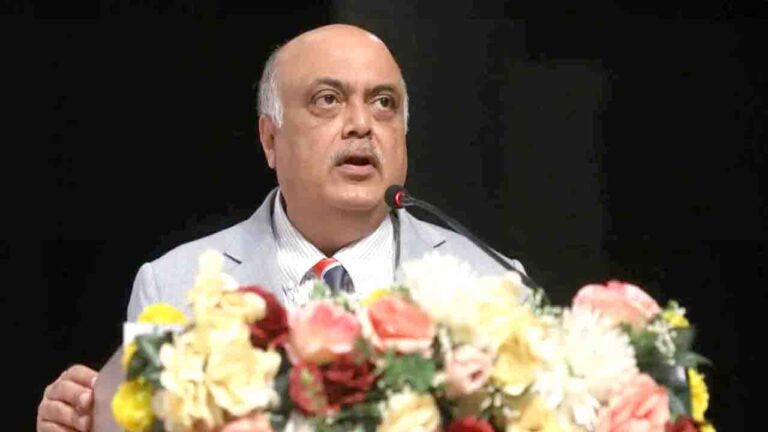
Speaking at the 5th International Conference of the ICA, Justice Amanullah pointed out that the pace of the justice delivery system is frequently dictated by how lawyers present and conduct their cases. He emphasized that while the judiciary is often the target of public scrutiny, the root causes of pendency are far more complex.
The Burden of the Docket
Providing a glimpse into the operational pressures of the Indian judiciary, Justice Amanullah revealed that hundreds of matters are listed before judges every single day. He noted that at the trial court level, it is common for a judge to handle no fewer than 400 to 500 cases daily, a number that often increases in the High Courts.
“A judge is required to sit for a fixed duration. Is there ever a complaint that a judge is not sitting? That happens very rarely,” he remarked. He further clarified that it is a judge’s constitutional duty to hear all arguments presented, even if they appear repetitive or prolonged.
Role of the Legal Fraternity
Justice Amanullah questioned whether a judge can truly be held accountable for the time consumed during proceedings. While he acknowledged that judges do intervene to prevent the wasting of court time, he stressed the importance of providing lawyers the space to address the court in their own manner.



“I tell them, ‘You cannot repeat, you are wasting time.’ But can I tell a lawyer he lacks intelligence or is making absurd arguments? I must give him that space; he might say something highly relevant,” the Justice explained. He suggested that there is a minimal correlation between the judge and the actual rate of case disposal, as the duration of proceedings is largely determined by the bar.
A Call for Professional Introspection
The Supreme Court judge urged the legal profession to engage in self-reflection. He noted that practices such as seeking frequent adjournments and delivering excessively long oral arguments contribute significantly to litigation delays.
“Ultimately, it depends on how much work you expect a person to perform within the court’s five-hour working window,” he stated, adding that the responsibility for efficiency must be shared between the bench and the bar.
On Judicial Expectations
In a notable observation on the qualities of a member of the bench, Justice Amanullah cautioned against expecting judges to be “intellectually paramount” or “experts” in every field. He argued that a judge who believes they are an absolute authority might leave no room for debate or listening.
“He must be fair and transparent. Brilliance is not a mandatory requirement for a judge. If he is a total master of his field, he may not leave scope for any argument,” he concluded.
Developments in the Judiciary: Justice Yashwant Varma Resigns
In a separate and developing story within the legal corridors, Justice Yashwant Varma has resigned from his post. Justice Varma, who was transferred to the Allahabad High Court from the Delhi High Court following a controversy involving the alleged burning of currency notes at a Delhi residence, submitted his resignation on Friday.
The resignation comes at a critical juncture, as a parliamentary committee was in the process of investigating charges against him following a recommendation for impeachment proceedings by a Supreme Court committee.