



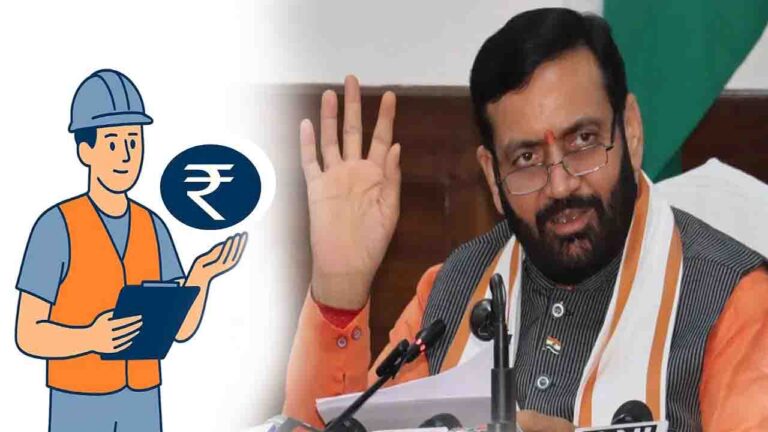

Haryana Minimum Wage Hike: CHANDIGARH -The Haryana government on Friday ordered an immediate 35% hike in minimum wages for unskilled workers, aiming to end a week of labor strikes and protests that paralyzed India’s primary automotive manufacturing hub.
The decision follows intense demonstrations and clashes between police and factory workers in Manesar, an industrial township situated 30 miles south of New Delhi. The region, which houses manufacturing giants like Maruti Suzuki and hundreds of ancillary units, saw widespread work boycotts as laborers struggled with the soaring cost of living triggered by the ongoing U.S.-Israeli conflict with Iran.
Significant Pay Raise Effective Immediately
Under the new order, the minimum wage for unskilled workers will rise to $165 per month (approximately ₹13,800), up from the previous rate of roughly $120. The Haryana government confirmed that this hike is effective retrospectively from April 1.
“We urge the workers to peacefully carry on their work,” stated Ajay Kumar, a senior state official, in a video address on Friday. Following the announcement, workers have reportedly begun resuming their duties across the industrial belt.
Escalating Costs and Supply Chain Strain
The wage hike comes at a precarious time for India’s automotive sector. The industry is already grappling with surging input prices and severe supply chain bottlenecks due to the Middle East crisis. India, the world’s second-largest importer of Liquefied Petroleum Gas (LPG), is currently facing its most acute gas shortage in decades.

To protect households, the federal government has prioritized cooking gas for domestic use, significantly cutting supplies to industries. This has led to a surge in prices at local eateries and street vendors, making basic meals unaffordable for many migrant laborers.
Akash Kumar, a 25-year-old employee at Munjal Showa—a supplier to Hero MotoCorp—noted that street vendors had doubled the price of staple meals. “Whatever we get, we have to be happy,” he said, acknowledging the relief the pay hike would provide.
Impact on Manufacturing Giants
The industrial unrest has already left a mark on production schedules. Roop Polymers, a supplier to Maruti and Honda, reported that work was “heavily disrupted” earlier in the week, though they later clarified that operations are returning to normalcy. Munjal Showa also confirmed that production was partially impacted.
While major manufacturers like Tata Motors and Mahindra have already increased vehicle prices to offset rising material costs, Maruti Suzuki has warned of similar price adjustments in the near future.
The Migrant Crisis and Economic Stability
The crisis has sparked fears of a mass exodus of migrant workers. With approximately 400 million local migrants in India, many have started returning to their home villages due to the erratic gas supply and high food costs.
Vinod Kumar, President of the India SME Forum, noted that employers are now resorting to offering free meals and bonuses to retain their staff. “Once labor leaves, it is very difficult to get them back,” he cautioned, urging the government to establish common kitchens for industrial clusters.
While diplomatic talks between the U.S. and Iran offer some hope for de-escalation, industry experts warn that it may take weeks for supply chains to stabilize.